Last updated: July 1, 2026
Enterprise Refurbishment Grading at a Glance
- Enterprise refurbishment programs depend on a seven-stage depot workflow that covers secure data erasure, testing, grading, repair and channel routing.
- Cosmetic grades A through D align device condition with the right resale or reuse channel and protect recovery value.
- Professional depots use NIST 800-88-compliant erasure, SOC 2 controls and serial-level traceability to support enterprise and government compliance programs.
- OEM Authorized Service Center status enables L2–L4 repairs that preserve warranty coverage and keep devices eligible for premium resale programs across more than 20 brands.
- Premier Logitech delivers this full workflow under one compliance-ready program, from intake through resale routing, for enterprise-scale device portfolios.
Why Cosmetic Grades Drive Channel Decisions
Cosmetic grading connects device appearance to business outcomes. It assigns a letter grade based on physical condition after functional testing and determines which channel can support that unit profitably.
Grades reflect visible wear and influence both resale price and program eligibility. The four-tier system below maps condition to the highest-value channel each unit can enter.
- Grade A: Like-new condition. No visible scratches, dents or screen marks. Suitable for premium secondary-market channels and certified refurbished programs.
- Grade B: Light wear. Minor scratches visible under direct light. Suitable for mainstream resale and enterprise redeployment.
- Grade C: Moderate wear. Visible scratches or scuffs that do not affect function. Suitable for value-tier resale or internal reuse programs.
- Grade D: Heavy wear or cosmetic damage. Functional but visibly impaired. Routed to parts harvesting, bulk liquidation or responsible recycling.
Enterprise programs rely on consistent grading criteria across every technician and shift. Standardized light boxes, reference samples and documented pass or fail thresholds reduce grade drift and protect downstream channel agreements.
How Functional Testing Supports Grading Decisions
Functional testing establishes whether a device is worth grading. It precedes cosmetic assessment and confirms that major subsystems operate within defined tolerances.
A standardized testing matrix evaluates the display, battery, camera, cellular and Wi-Fi radios, sensors, ports and biometric readers. Each test produces a pass or fail result that is logged to the device serial number.
Traceability checkpoints run throughout this process. IMEI or serial number scans tie every test result, grade assignment and repair action to a single device record. That record travels with the unit from intake to final disposition and feeds compliance reporting dashboards for the client.
Data Erasure Standards in a Professional Depot
Secure data erasure protects sensitive information and underpins every compliant refurbishment program. Professional depots follow NIST 800-88 guidelines, the federal standard for media sanitization.
Automated wipe tools overwrite storage media and generate a certificate of erasure for each device. The depot logs that certificate to the chain-of-custody record created at intake so every unit has a verifiable destruction trail.
SOC 2 reporting provides an independent audit of controls governing data handling, access and destruction. For programs subject to CMMC requirements, the depot demonstrates that data destruction controls meet the applicable maturity level. Premier Logitech structures operations to support TAA, NIST 800-88, CMMC and SOC 2 requirements, giving enterprise and government clients a single compliance-ready partner.
L1–L4 Depot Repair Levels and Scope
Repair tiers define how far technicians go to restore a device. Assignments follow functional test results and cost-recovery analysis so each unit receives the right level of intervention.
- L1 – Software and configuration: OS reloads, firmware updates, factory resets and basic diagnostics. No hardware replacement.
- L2 – Component swap: Replacement of field-replaceable units such as batteries, screens and keyboards using OEM-authorized parts.
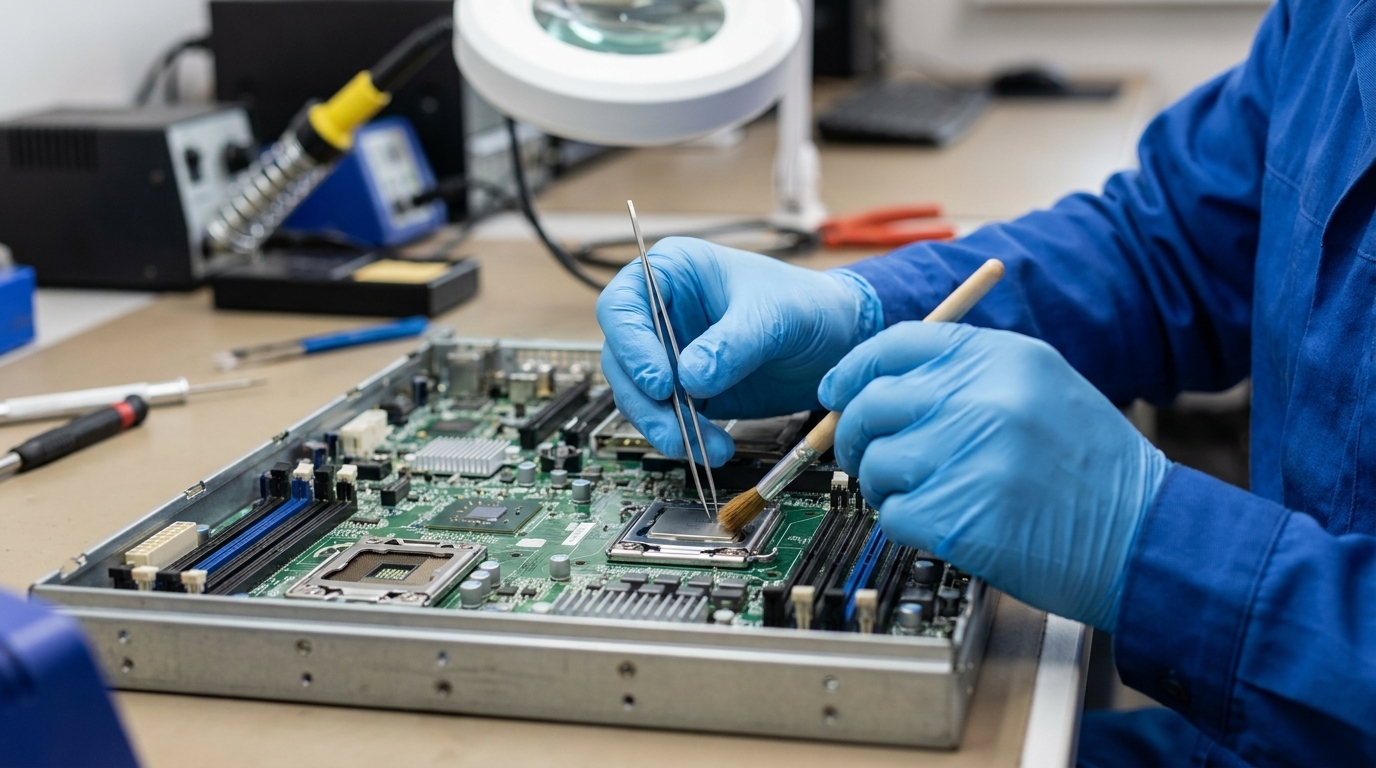
- L3 – Board-level repair: Soldering, BGA rework and subassembly replacement that require specialized equipment and OEM authorization.
- L4 – Full depot rebuild: Complete disassembly, parts harvesting and rebuild when component-level repair is more cost-effective than replacement.
OEM Authorized Service Center status is required to perform L2–L4 repairs under warranty terms. Premier Logitech holds ASC authorizations with more than 20 OEM brands, which preserves warranty coverage and protects resale value at every repair tier.
Routing Refurbished Devices to Secondary Markets
Final channel routing converts grading and repair work into revenue. After final QC, devices move to the channel that aligns grade, condition and client recovery targets.
Grade A units support certified refurbished programs or direct enterprise redeployment. Grade B units enter mainstream resale channels. Grade C units move to value-tier buyers or internal reuse programs. Grade D units support parts harvesting or responsible e-waste recycling.
Compliant packaging, accurate grade labeling and serialized documentation protect channel partners from liability and support return-rate management. Inventory visibility tools provide real-time data on units by grade, repair status and channel destination.
Stage 1 – Receiving and Registration
Intake establishes the device record that anchors every later decision. Every inbound unit is scanned at receipt, and that scan captures the IMEI or serial number that creates the master device record.
Lock status, physical condition and RMA documentation are logged to that record at intake. This initial logging establishes the chain of custody that follows the device through every subsequent stage and supports downstream compliance reporting.
Stage 2 – Secure Data Erasure and Chain of Custody
Data sanitization begins as soon as intake is complete. Automated tools execute NIST 800-88-compliant wipes and write the erasure certificate to the device record.
Any unit that fails erasure is flagged for physical destruction rather than reuse. Audit trails are maintained in a format suitable for SOC 2 and CMMC reporting so security teams can validate every action.
Clients receive disposition documentation for every unit processed, which supports internal audits and external regulatory reviews.
Stage 3 – Functional Testing Matrix
Functional testing confirms operational health before repair or grading. Technicians run each device through a standardized protocol covering all major subsystems.
Test scripts are version-controlled and align with OEM requirements where ASC agreements specify them. Pass or fail results are recorded by serial number and linked to the device record.
Units that fail specific subsystems route to the appropriate L1–L4 repair path instead of moving directly to grading and release.
Stage 4 – Cosmetic Grading Criteria
Cosmetic grading translates physical condition into a clear letter grade. Grading occurs under controlled lighting using reference standards so technicians apply criteria consistently.
Technicians evaluate the display, housing, ports and any accessories. Each grade assignment is recorded and linked to the device record, and quality gates prevent units from advancing to packaging without a confirmed grade.
Photographic documentation supports dispute resolution and channel partner audits when questions arise about specific units.
Stage 5 – Refurbishment and Repair (L1–L4)
Repair work restores functional performance while protecting warranty status. Repair scope is determined by functional test results and a cost-recovery threshold.
That determination routes L1 repairs to the testing station for immediate completion. L2 through L4 repairs move to specialized benches staffed by OEM-authorized technicians.
Parts sourcing for those repairs follows OEM guidelines to preserve warranty coverage. Harvested components from Grade D units re-enter the parts inventory, which reduces procurement costs and diverts material from e-waste streams.
Discuss OEM authorization coverage and repair capacity for an enterprise device portfolio.
Stage 6 – Final QC, Labeling and Packaging
Final QC confirms that every unit meets functional, cosmetic and documentation standards. Every device passes a complete final inspection before packaging.
Serialization is confirmed, grade labels are applied and TAA-compliant documentation is generated where required. Packaging specifications follow client or channel partner requirements so units arrive ready for sale or redeployment.
Units that fail final QC return to the appropriate repair stage instead of entering outbound inventory.
Stage 7 – Asset-Recovery Channels and Program Reporting
Asset-recovery decisions align device condition with revenue goals. Channel routing decisions are driven by grade, OEM program eligibility and client recovery targets.
Inventory visibility tools provide real-time data on units available by grade and destination. Recovery metrics are reported at the program level so supply chain leaders can evaluate refurbishment ROI.
These insights support adjustments to intake criteria, repair thresholds and channel mix over time.
Questions to Ask a Depot Partner
Operations and supply chain leaders benefit from a structured evaluation framework when selecting a depot partner. The points below highlight core areas that shape program performance.
- Scalability: The depot must operate at the required volume without adding risk to turnaround consistency. Premier Logitech processes high repair volumes across DFW facilities and nearshore operations in Mexico.
- OEM authorizations: ASC status should align with the OEMs in the client device portfolio. Premier Logitech’s multi-OEM authorization coverage supports broad device mixes.
- Compliance reporting: The partner should produce NIST 800-88 erasure certificates, SOC 2 audit reports and CMMC-aligned documentation on demand.
- Single-vendor consolidation: A partner that covers intake, repair, grading, fulfillment and recycling under one program reduces fragmented vendor relationships.
- Traceability: Serial-level tracking from receipt to final disposition with client-accessible reporting supports audits and performance reviews.
- Government eligibility: TAA compliance and a CAGE code support participation in federal programs.
Conclusion
A device refurbishment grading depot with strong compliance controls, OEM authorization and serial-level traceability protects revenue and reduces regulatory risk for enterprise programs. Premier Logitech delivers the full seven-stage workflow from IMEI capture at intake through NIST 800-88 erasure, L1–L4 OEM-authorized repair, cosmetic grading and secondary-market routing under a single, compliance-ready program.
With high repair volumes, ASC status across more than 20 brands and certifications aligned to required enterprise and government frameworks, Premier Logitech consolidates the full workflow under one program. Build a compliance-ready refurbishment program with a single-source lifecycle partner.
Frequently Asked Questions
What is the difference between cosmetic grading and functional testing in a device refurbishment depot?
Functional testing evaluates whether device subsystems operate correctly, including display output, battery charge, radio connectivity, sensor response and port function. Cosmetic grading evaluates physical appearance, including scratches, dents, screen marks and housing condition.
Both assessments are required before a device receives a resale grade. A device can pass functional testing and still receive a low cosmetic grade, which affects its channel routing and recovery value.
Professional depots run functional testing first and cosmetic grading second so repair decisions occur before grade assignment.
Which compliance frameworks apply to enterprise device refurbishment in the United States?
The most commonly required frameworks for U.S. enterprise programs are NIST 800-88 for data erasure, SOC 2 for operational security controls, CMMC for programs touching defense supply chains and TAA for government procurement eligibility. ISO quality frameworks apply to process consistency and environmental handling.
A depot serving OEMs, telecom carriers and government agencies needs to demonstrate compliance with all of these, not just one or two. Premier Logitech holds certifications and operational controls aligned to these frameworks.
What does OEM Authorized Service Center status mean for depot repair?
An OEM Authorized Service Center designation means the depot has been vetted and approved by the original equipment manufacturer to perform repairs using OEM-certified parts and processes. For enterprise programs, ASC status matters because repairs performed outside an authorized depot can void device warranties and disqualify units from certified refurbished channels.
Premier Logitech’s ASC status across more than 20 brands means L2 through L4 repairs on those devices preserve warranty coverage and maintain eligibility for premium resale channels.
How does a depot handle devices that cannot be refurbished or resold?
Devices that fail functional testing and are not cost-effective to repair at any L1–L4 tier are routed to parts harvesting or responsible recycling. Harvested components re-enter the parts inventory for use in other repairs, which reduces procurement costs and diverts material from landfill.
Units with no recoverable value are processed through certified e-waste recycling programs. Chain-of-custody documentation and certificates of destruction are generated for every unit, giving clients an auditable record of final disposition for compliance and sustainability reporting.
Can a single depot partner manage the full reverse logistics workflow, or are multiple vendors typically required?
Many enterprise programs rely on separate vendors for RMA intake, repair, grading, fulfillment and recycling, which creates visibility gaps, compliance inconsistencies and coordination overhead. A single-source depot partner with end-to-end capabilities eliminates those gaps by maintaining one chain of custody, one compliance reporting structure and one point of contact across the full workflow.
Premier Logitech operates as a single-source lifecycle partner, covering intake, secure data erasure, L1–L4 repair, cosmetic grading, final QC, packaging, fulfillment and responsible recycling under one program.
