Last updated: April 17, 2026
Key Takeaways for Tech Reverse Logistics Leaders
- The 7 Rs framework (Return, Receive, Repair/Refurbish, Replace, Remark, Resell, Recycle) gives technology companies a structured way to manage reverse logistics for IT hardware, telecom equipment, and consumer devices.
- Specialized reverse logistics for tech protects data, recovers high-value components, and supports compliance with e-waste regulations such as WEEE and EPR.
- Premier Logitech processes more than 40,000 repairs each week across 20+ OEM Authorized Service Centers, delivering high recovery rates and meaningful cost savings through integrated 7 Rs execution.
- AI-driven automation and structured RMA workflows speed up returns, repairs, and resale while improving asset value recovery and consistency.
- Partner with Premier Logitech to apply the 7 Rs framework and generate measurable ROI from your technology reverse logistics operations.
How the 7 Rs Framework Works for Tech Reverse Logistics
The 7 Rs framework guides every step of a returned technology product, from intake to final disposition, with each stage tailored to IT hardware, telecom equipment, and consumer electronics.
1. Return: The process starts with RMA (Return Merchandise Authorization) systems for smartphones, servers, laptops, and other devices. This stage verifies warranty status, captures reason codes, and sets routing rules based on product type and condition.
2. Receive: Centralized facilities handle physical intake and initial processing, including sorting, grading, and inventory updates. Teams use specialized procedures for batteries, screens, and sensitive components during receiving.
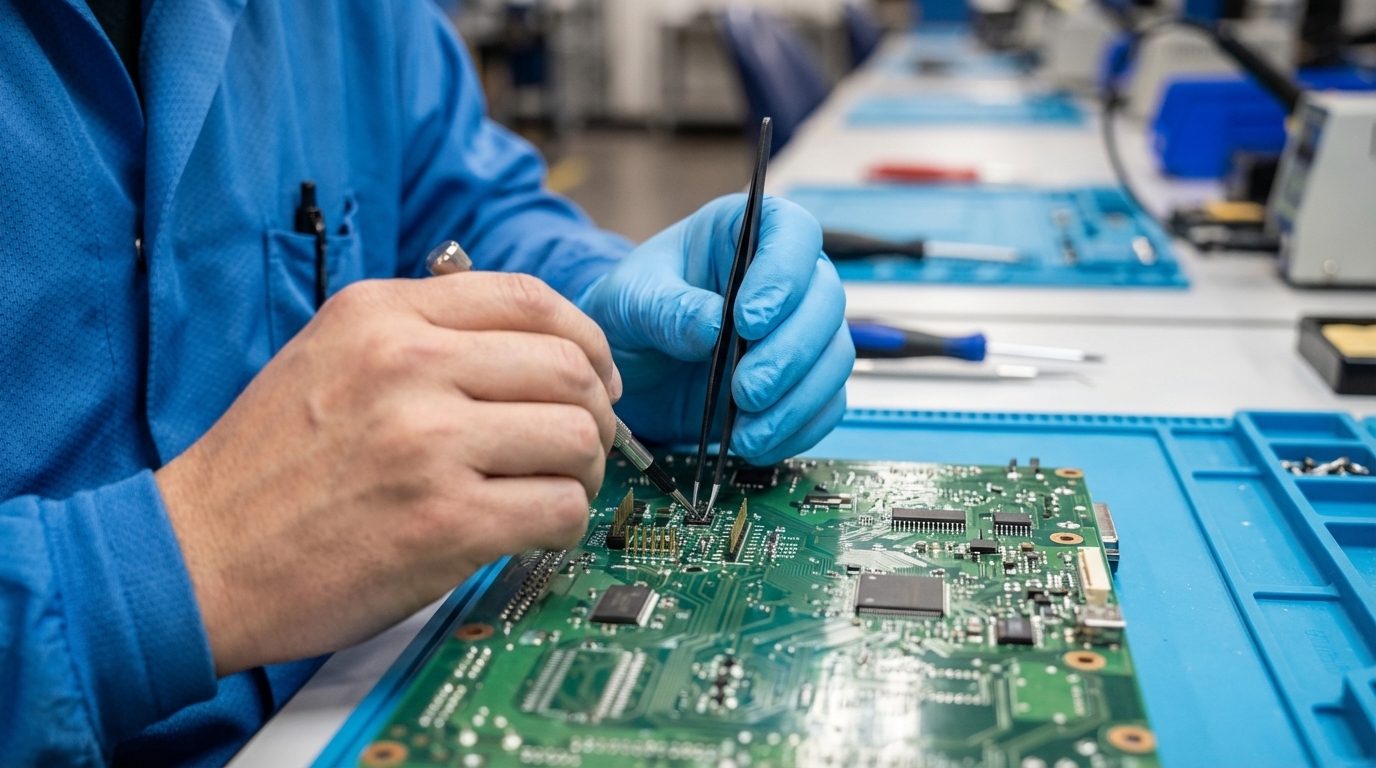
3. Repair/Refurbish: Technical restoration services range from Level 1 basic repairs to Level 4 complex board-level work. This stage covers depot repair, cosmetic refurbishment, and component-level diagnostics designed for modern technology products.
4. Replace: Rapid exchange programs and warranty replacement services keep customers online and productive. This capability is critical in technology supply chains where device uptime directly affects business operations.
5. Remark: Product identification and tracking records are updated, including IMEI tagging for mobile devices, asset tags for enterprise equipment, and certification marks for refurbished products entering secondary markets.
6. Resell: Refurbished and certified technology products move into secondary channels such as B2B marketplaces, consumer platforms, and wholesale distribution partners.
7. Recycle: End-of-life products go through responsible disposal and material recovery, including secure data destruction, precious metal recovery, and compliance with WEEE and EPR requirements.
The 7 Rs framework expands on traditional 5 Rs models by adding the Remark and Resell stages, which are especially valuable for technology assets. These stages help companies capture more value from returns instead of moving directly from repair to recycling.
Applying the 7 Rs in Tech Supply Chains: Challenges and Practical Fixes
Return and Receive Improvements for High-Volume Tech Flows
Technology companies face heavy pressure in the Return and Receive stages because of high-volume warranty claims and fast product refresh cycles. Telecommunications providers running device upgrade programs often see return spikes that overwhelm traditional processing capacity. A practical solution uses structured RMA processes with automated routing based on reason codes and product condition.
Premier Logitech supports these demands through centralized DFW facilities and nearshore operations in Mexico, which together can process more than 500,000 units each month. Advanced Transportation Management Systems (TMS) give real-time visibility and automated routing, which reduces bottlenecks and shortens processing time.
Repair, Replace, and Remark Integration for Faster Turnaround
The middle stages of the 7 Rs framework depend on strong technical capabilities and fast cycle times. Technology products require specialized repair skills, from smartphone screen replacements to complex server diagnostics. AI and machine learning now support reverse logistics by automating quality checks and improving resource planning.
Effective execution also requires OEM authorization and strict alignment with manufacturer specifications. Premier Logitech holds more than 20 Authorized Service Center designations, which allows direct warranty work and enforces OEM quality standards while still supporting rapid exchange programs.
Premier Logitech’s 7 Rs Execution: Measurable Outcomes for Tech Clients
Premier Logitech’s 7 Rs implementation delivers measurable gains across complex technology supply chains. Major clients have reduced e-waste disposal costs through stronger Repair and Resell programs while still meeting demanding warranty SLAs. Enterprise telecommunications providers have captured significant annual savings through structured refurbishment and well-managed secondary market resale.
The company’s approach includes comprehensive compliance frameworks that support TAA, NIST, CMMC, and SOC 2 requirements, which matter for government and enterprise deployments. This compliance strength, combined with CAGE Code 4WAJ9 designation, positions Premier Logitech as a trusted partner for secure technology lifecycle management. The following comparison shows how this scale and specialization translate into stronger performance across key metrics.
| Metric | Premier Logitech | Generic Providers |
|---|---|---|
| Repairs/Week | 40,000+ | <10,000 |
| OEM ASCs | 20+ | 5-10 |
| Client Savings | $400M+ | N/A |
| Recovery Rate | High | Moderate |
Talk to a lifecycle expert to see how Premier Logitech’s 7 Rs model can support similar outcomes for your technology supply chain.
7 Rs Best Practices, Common Pitfalls, and 2026 Tech Trends
Successful 7 Rs programs track clear KPIs such as high processing yield, strong asset recovery rates, and short cycle times. However, achieving these metrics becomes difficult when companies fall into common pitfalls, especially fragmented vendor relationships that create data security gaps and uneven quality standards across the reverse logistics network.
Premier Logitech reduces these risks through single-vendor consolidation and rigorous data security controls. This integrated model removes handoffs between multiple providers while still preserving deep expertise across all seven Rs stages.
Key 2026 trends include AI-driven routing decisions and automated inspection capabilities that cut processing times and improve accuracy. Circular economy initiatives also increase focus on remanufacturing and reuse within the global reverse logistics market.
Frequently Asked Questions
What are examples of the 7 Rs framework in technology supply chains?
The 7 Rs framework supports many technology use cases. For telecommunications providers, the Return stage covers customer trade-ins and warranty claims. Receive includes sorting devices by condition and model at centralized hubs. Repair/Refurbish covers screen replacements, battery changes, and software updates. Replace delivers rapid exchange services for business-critical devices. Remark updates IMEI databases and applies certification labels. Resell uses certified pre-owned programs and wholesale channels. Recycle handles secure data destruction and material recovery for end-of-life units.
How does Premier Logitech maintain compliance across the 7 Rs framework?
Premier Logitech maintains compliance through certifications that include TAA, NIST, CMMC, and SOC 2. The company’s CAGE Code 4WAJ9 designation supports secure handling of government technology assets. Each stage of the 7 Rs process follows specific compliance steps, from secure data destruction during Repair to certified recycling partners for the Recycle stage. Real-time tracking and documentation provide complete audit trails across all reverse logistics activities.
What advantages does the 7 Rs framework offer compared to traditional 5 Rs models in IT asset recovery?
As explained in the framework overview, the additional Remark and Resell stages help technology companies capture more value than traditional 5 Rs approaches. Older models often move quickly to recycling and overlook secondary market opportunities. The 7 Rs structure supports better tracking, certification, and resale pathways before any final recycling decision.
What ROI metrics should technology companies expect from 7 Rs implementation?
Technology companies that adopt the 7 Rs framework often see lower costs compared to fragmented reverse logistics setups. Asset recovery rates improve through consistent processing and structured access to secondary markets. AI-supported automation and streamlined workflows reduce processing time. Organizations also gain sustainability benefits, including lower virgin material use and reduced greenhouse gas emissions through expanded remanufacturing.
How do emerging technologies like AI affect 7 Rs framework implementation in 2026?
AI technologies reshape 7 Rs execution through predictive analytics that forecast return volumes and guide staffing and capacity planning. Automated inspection tools improve accuracy and speed in the Receive and Repair stages. Machine learning models refine routing choices and disposition decisions across all seven stages. Blockchain integration strengthens traceability and transparency throughout the reverse logistics chain. These tools typically deliver 20 to 30 percent gains in processing efficiency while cutting manual labor and human error.
Conclusion: Turning Reverse Logistics into a Strategic Tech Asset
The 7 Rs framework gives technology companies a clear structure for reverse logistics that fits the needs of IT hardware, telecom equipment, and consumer electronics. By consistently applying Return, Receive, Repair/Refurbish, Replace, Remark, Resell, and Recycle, organizations can reduce costs, increase asset recovery, and support ambitious sustainability goals.
Premier Logitech helps technology leaders put this framework into practice with proven processes and scale. Talk to a lifecycle expert for a tailored assessment that can unlock significant savings while maintaining compliance and operational excellence across your reverse logistics operations.
