Last updated: April 17, 2026
Key Takeaways for IT Reverse Logistics Leaders
- The 5 Rs framework (Returns, Repair, Refurbish/Resell, Replace, Recycle) structures IT reverse logistics to recover more value and control costs amid 30% global return rates.
- Streamlined returns processing with automated RMAs and built-in data security cuts administrative overhead by 50% while maintaining NIST-compliant handling.
- Repair and refurbishment together reduce lifecycle costs and recover meaningful asset value through depot fixes and certified pre-owned programs.
- Rapid replacement programs and compliant recycling support 90%+ material recovery, align with 2026 EPA grants and state EPR laws, and reinforce zero-landfill commitments.
- Premier Logitech’s end-to-end 5 Rs programs have generated $400M+ in client savings; connect with a lifecycle specialist to review your current reverse logistics model.
How the 5 Rs Shape Modern Reverse Logistics
The 5 Rs framework defines the core processes for managing product returns and end-of-life technology assets. Some industry sources reference variations like the 4 Rs or add elements such as Repackaging, but the standard 5 Rs model covers the full lifecycle for IT reverse logistics operations.
The global reverse logistics market is estimated to be worth $993.28 billion in 2023 and continues to grow. Technology brands drive much of this growth as they seek efficient returns processing, asset recovery, and compliance at scale.
For IT organizations, the 5 Rs framework addresses RMA management, data security requirements, OEM warranty compliance, and regulatory obligations. Each R represents a specific value recovery lever that can reduce total cost of ownership while protecting customer satisfaction when executed with discipline.
Returns (R1): Intake and Triage That Customers Actually Use
Effective returns management starts with simple, predictable intake workflows that shorten processing time and improve the customer experience. Best practices include user-friendly return portals, prepaid return labels, automated Return Merchandise Authorization (RMA) systems, and real-time status updates.
IT organizations must embed data security into returns from the first touchpoint. NIST-compliant data wiping procedures should begin immediately when devices arrive, and Transportation Management Systems (TMS) should provide real-time tracking across the reverse supply chain.
Implementing these security and tracking requirements at scale calls for broad carrier coverage and centralized processing. Premier Logitech’s returns infrastructure delivers this integration with 120+ vetted carriers across North America and a centralized DFW logistics hub. This hub supports rapid triage and routing decisions that accelerate the entire reverse logistics cycle.
Key performance indicators for returns include first-pass yield rates, average processing time per unit, and customer satisfaction scores. Organizations that adopt comprehensive returns management often cut administrative overhead by half while gaining clearer visibility into every step of the reverse supply chain.
Repair (R2): Depot Operations That Extend Device Life
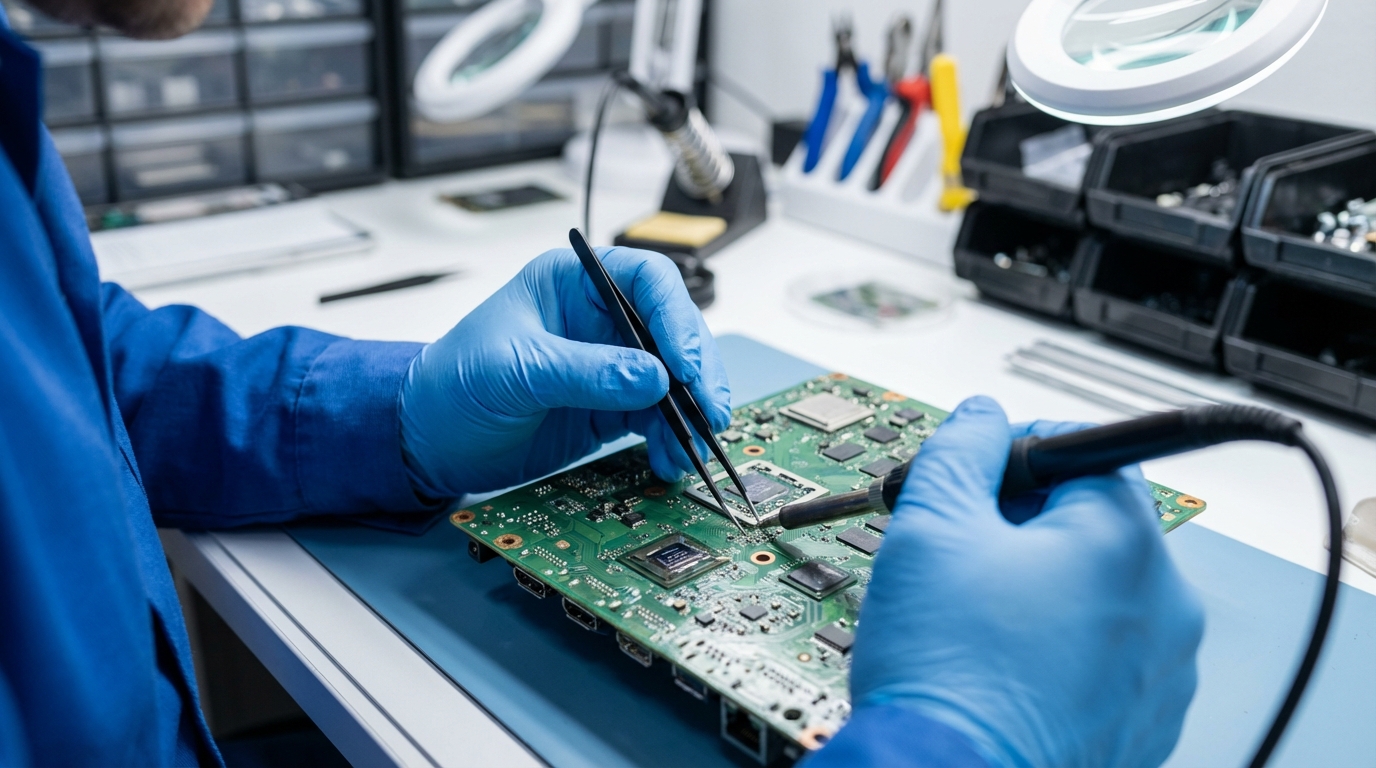
Depot repair operations often deliver the highest value recovery within the 5 Rs framework. Effective repair processes diagnose issues, replace components, and extend product life to maintain customer trust.
IT-focused repair programs rely on multi-level diagnostic capabilities (L1 through L4), parts harvesting from non-repairable units, and rigorous quality assurance testing. Authorized Service Center (ASC) status with major OEMs secures access to genuine parts and preserves warranty coverage throughout the repair lifecycle.
Premier Logitech operates one of the industry’s largest repair networks, processing 40,000+ repairs weekly across 20+ OEM Authorized Service Centers. This scale supports predictive analytics for failure pattern identification and proactive parts inventory planning, which shortens repair cycle times and stabilizes service levels.
Advanced repair environments also use IoT sensors and machine learning models to refine routing decisions and anticipate component failure rates. Organizations that build mature repair capabilities reduce dependence on full replacement while maintaining equivalent performance standards for end users.
Refurbish and Resell (R3): Turning Returns into Revenue
Refurbishment converts returned products into certified pre-owned inventory that can be sold through secondary channels. This process relies on comprehensive testing, cosmetic restoration, and certification to recapture value from returned goods.
IT refurbishment programs require detailed grading systems that measure both functional performance and cosmetic condition. Telecom devices, gaming equipment, and enterprise hardware each follow tailored refurbishment protocols to meet secondary market expectations for reliability and appearance.
Successful refurbishment programs typically recover a meaningful share of original product value, with premium devices achieving the highest returns. Companies like Apple run comprehensive refurbishment programs for high-value tech products, including quality inspections, repairs, certification, and resale at competitive prices.
Premier Logitech’s refurbishment capabilities have generated over $70 million in raw material savings for clients. This performance highlights how scaled, well-managed refurbishment programs can materially improve asset recovery. Explore how a customized refurbishment program can increase recovery on your existing device portfolio.
Replace (R4): Exchange Programs That Protect Uptime
Replacement programs provide immediate product exchanges so customers stay online while defective units move through repair or refurbishment. These programs depend on tight inventory control and coordinated logistics to meet service level agreements consistently.
IT replacement strategies often include next-day exchanges for critical business equipment, advance replacement for field-deployed devices, and direct-to-consumer fulfillment for warranty claims. Effective programs maintain buffer inventory in strategic locations to satisfy regional coverage requirements without overstocking.
Premier Logitech’s enterprise exchange programs use the company’s extensive carrier network and DFW logistics hub to deliver rapid replacement services that raise customer satisfaction while controlling cost. This geographic coverage supports next-day delivery to most North American locations, and customers also gain confidence from reliable stock levels. The company’s inventory management systems provide real-time visibility into replacement unit availability across multiple product categories.
Key success factors for replacement programs include accurate demand forecasting, thoughtful inventory positioning, and integrated systems that trigger replacement shipments as soon as returns receive authorization. Organizations that mature these capabilities see measurable gains in customer satisfaction and reduced downtime for critical users.
Recycle (R5): Secure, Compliant End-of-Life Management
Recycling closes the 5 Rs loop by focusing on material recovery and compliant disposal of end-of-life products. Robust recycling practices support regulatory compliance, reduce environmental impact, and provide ESG evidence for sustainability reporting.
Regulatory expectations rise in 2026 with EPA’s $275 million Solid Waste Infrastructure for Recycling grant program and expanding state EPR laws. Twenty-three U.S. states now have electronics EPR laws that shift disposal costs from municipalities to manufacturers and require detailed compliance reporting.
IT recycling programs should include certified data destruction, material separation for precious metal recovery, and clear zero-landfill commitments. Premier Logitech’s recycling operations maintain TAA compliance and CMMC certification and provide detailed chain-of-custody documentation to support audits and regulatory reviews.
Organizations that invest in comprehensive recycling programs improve material recovery while maintaining consistent compliance across multiple jurisdictions. These programs also strengthen ESG narratives for stakeholders and customers.
Implementing the 5 Rs Framework: From Roadmap to Measurable ROI
Successful 5 Rs implementation starts with a structured assessment of current capabilities, technology stack, and partner ecosystem. A practical roadmap usually covers needs assessment, TMS integration, process standardization, and performance monitoring across all five processes.
The table below summarizes typical savings opportunities for each R and illustrates how Premier Logitech’s programs perform against those benchmarks.
| R Process | Typical Savings | Premier Logitech Example |
|---|---|---|
| Returns | 50% time reduction | 30% faster turnaround with 120+ carriers |
| Repair | Significant savings vs replacement | 40,000+ weekly repairs across 20+ ASCs |
| Refurbish | Meaningful value recovery on returned assets | $70M in material savings generated |
| Replace | Higher customer satisfaction and reduced downtime | Enterprise-grade exchange programs |
| Recycle | High material recovery with full compliance | Zero-landfill with TAA/CMMC compliance |
Common implementation pitfalls include fragmented vendor relationships, limited data visibility, and weak compliance frameworks. Premier Logitech’s end-to-end model consolidates all 5 Rs with a single partner, which simplifies vendor management and delivers unified performance reporting.
The company’s track record of more than $400 million in supply chain savings shows the ROI potential of a coordinated 5 Rs strategy. Request a customized 5 Rs implementation assessment for your organization to identify specific savings and compliance gains.
Frequently Asked Questions
What are the key differences between the 5 Rs and 4 Rs frameworks?
The 5 Rs framework treats Replace as its own process, reflecting the role of exchange programs in protecting customer satisfaction while defective products move through repair or refurbishment. The 4 Rs model usually folds replacement into other categories, but modern IT reverse logistics benefits from dedicated replacement workflows that support strict service level agreements and minimize downtime.
How does IT reverse logistics apply the 5 Rs framework?
IT reverse logistics adapts each R to technology-specific needs. Returns include NIST data wiping protocols. Repair relies on multi-level diagnostics and ASC compliance. Refurbish covers both functional and cosmetic restoration for secondary markets. Replace focuses on rapid exchange programs that protect business continuity. Recycle manages compliant e-waste processing with certified data destruction.
What capacity does Premier Logitech offer for high-volume returns processing?
Premier Logitech processes 40,000+ repairs weekly and manages 500,000 units monthly through its kitting operations. The DFW logistics hub and 120+ carrier network provide scalable infrastructure for organizations handling high-volume technology returns across diverse product categories and regions.
What 2026 compliance updates affect the Recycle (R5) process?
Several 2026 regulations reshape e-waste expectations, including EPA’s expanded recycling grant program, Pennsylvania Senate Bill 856 on electronic waste recycling, and California SB 501 on battery recycling. These updates increase documentation, reporting, and tracking requirements throughout the recycling process.
What ROI can organizations expect from optimized Repair and Refurbish processes?
Repair operations often deliver substantial savings compared to full replacement, while refurbishment programs recover a meaningful share of original product value. Organizations that mature both capabilities frequently see 30-50% reductions in total reverse logistics costs while maintaining performance and customer satisfaction.
The 5 Rs framework gives IT leaders a practical structure for improving reverse logistics performance and compliance. Organizations that implement all five processes in a coordinated way reduce costs, strengthen sustainability metrics, and improve customer outcomes. Partnering with Premier Logitech provides access to proven 5 Rs programs, integrated infrastructure, and measurable results across every stage of the reverse lifecycle.
