Last updated: April 17, 2026
Key Takeaways
- Premier Logitech leads PLM services with end-to-end lifecycle management, handling 40k repairs weekly and $400M in client savings across IT, telecom, and government sectors.
- Siemens Teamcenter and PTC Windchill dominate enterprise software with digital twin, IoT, and BOM management for complex manufacturing.
- Cloud-native options like Arena PLM and OpenBOM give SMBs accessible, scalable PLM with rapid deployment and predictable pricing.
- Traditional PLM software excels at design and engineering but often lacks execution capabilities for reverse logistics and asset recovery. Hybrid PLM approaches combine software platforms with specialized service providers to address complete product lifecycles.
- Get started with Premier Logitech for compliant, scalable lifecycle services that strengthen your 2026 PLM strategy.
Top 10 Product Lifecycle Management Providers for 2026
1. Premier Logitech (Service Leader for IT Lifecycle)
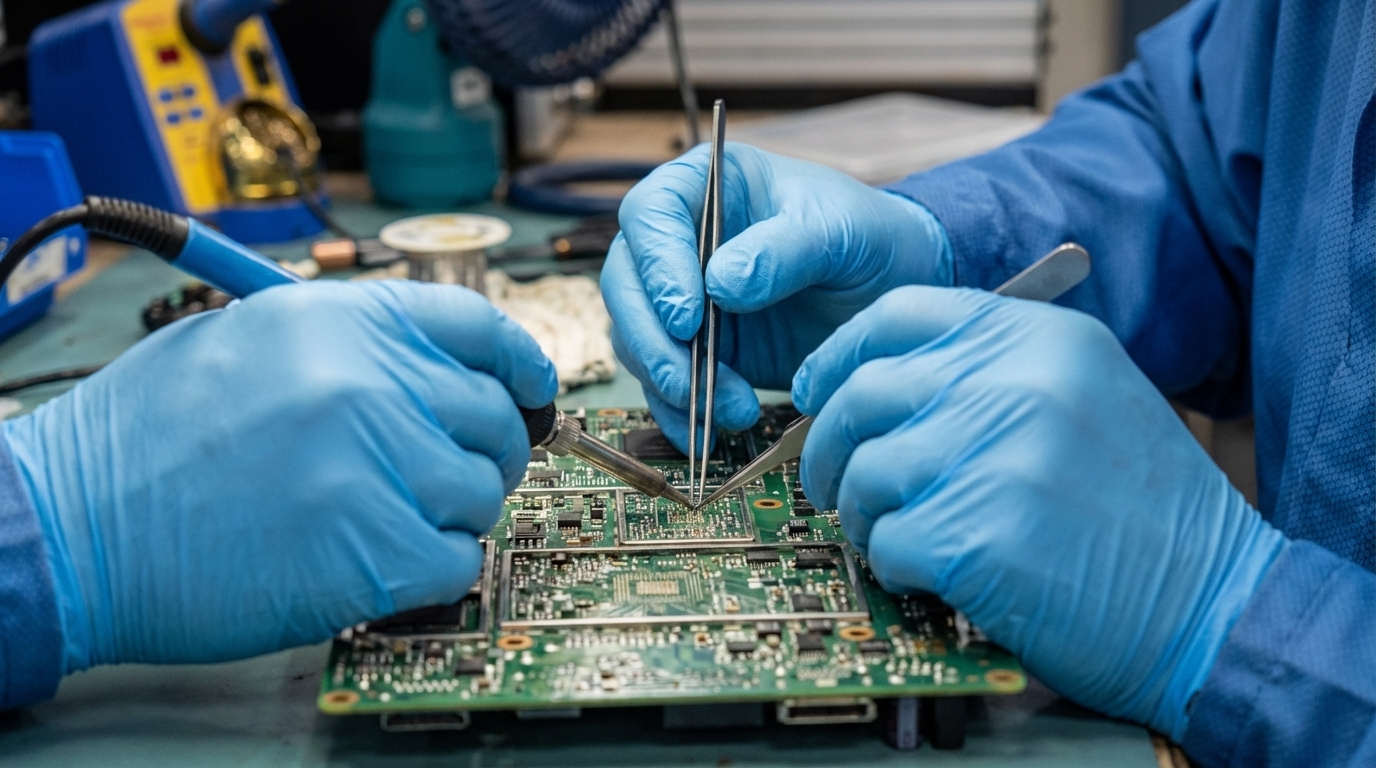
Premier Logitech delivers end-to-end IT lifecycle services from sourcing through recycling, with specialized reverse logistics and depot repair operations handling over 40,000 repairs weekly. This repair scale, combined with Authorized Service Center (ASC) status for 20+ OEM brands, supports rigorous government compliance certifications including TAA, NIST, CMMC, and SOC 2. These capabilities enable scalable operations of 500,000 kitting units monthly and contribute to more than $400M in documented client supply chain savings.
- Pros: Single-source lifecycle partner, modular service offerings, comprehensive compliance framework
- Cons: Enterprise-focused pricing, requires minimum volume commitments
- Best For: IT, telecom, and government organizations managing high return volumes, warranty claims, and strict compliance requirements
2. Siemens Teamcenter
Siemens Teamcenter leads enterprise PLM with comprehensive digital twin integration and multi-CAD interoperability, recognized as a leader in the Forrester Wave™: Product Lifecycle Management for Discrete Manufacturing Q3 2025. The platform excels in BOM management, engineering change control, and cloud scalability through Teamcenter X SaaS deployment.
- Pros: Enterprise manufacturing focus, robust digital twin capabilities, extensive CAD integration
- Cons: Complex implementation requiring expert setup, high total cost of ownership
- Best For: Large manufacturing enterprises with complex product portfolios and digital transformation initiatives
3. PTC Windchill
PTC Windchill specializes in digital thread connectivity and IoT integration for complex product management, offering advanced product data management and version control capabilities. The platform supports high-tech precision manufacturing with engineering-focused workflows and comprehensive CAD management.
- Pros: Strong IoT connectivity, digital thread implementation, technical engineering focus
- Cons: On-premise deployment preference, steep learning curve
- Best For: High-tech manufacturers requiring IoT integration and complex product data management
4. Dassault ENOVIA
Dassault ENOVIA integrates within the 3DEXPERIENCE platform, providing model-based systems engineering and advanced version control. The solution offers deep CAD integration with CATIA and strong design-to-production continuity for complex product structures.
- Pros: Seamless CAD integration, model-based systems engineering, design-centric workflows
- Cons: High implementation costs, complex licensing structure
- Best For: Automotive, aerospace, and defense industries requiring integrated design and simulation capabilities
5. Aras Innovator
Aras Innovator provides open low-code architecture for customizing complex workflows, recognized in the Forrester Wave™ and IDC’s 2025 SaaS CSAT Awards. The platform supports digital twin functionality and model-based systems engineering with flexible deployment options.
- Pros: Highly customizable, open architecture, strong digital twin support
- Cons: Requires technical expertise for customization, complex initial setup
- Best For: Organizations needing extensive customization and model-based systems engineering capabilities
6. Arena (PTC)
Arena PLM offers cloud-native product data management for hardware teams with built-in change control and supplier collaboration tools. The platform includes quality management for compliance and rapid deployment for mid-market manufacturers.
- Pros: Quick cloud deployment, integrated quality management, supplier collaboration
- Cons: Limited enterprise scalability, fewer advanced features than enterprise platforms
- Best For: High-tech SMBs and hardware teams needing rapid PLM deployment
7. Autodesk Fusion Manage
Autodesk Fusion Manage provides lightweight cloud-based PLM with seamless integration to Autodesk CAD tools and configurable workflows. The solution offers customizable dashboards and change management capabilities at accessible pricing.
- Pros: Affordable pricing, seamless CAD integration, user-friendly interface
- Cons: Limited enterprise features, basic workflow capabilities
- Best For: Design teams using Autodesk tools that need integrated PLM functionality
8. OpenBOM
OpenBOM focuses on flexible BOM management with customizable data models and support for multiple BOM types including EBOM and MBOM. The platform offers native CAD integrations and engineering change management with cost-effective pricing that includes free plan options.
- Pros: Free tier available, flexible BOM management, CAD integrations
- Cons: BOM-focused functionality, limited enterprise workflow capabilities
- Best For: Small to mid-size manufacturers prioritizing BOM management and cost control
9. Flex (Service Provider)
Flex delivers global manufacturing and repair services with extensive scale across multiple regions and product categories. The company provides contract manufacturing, supply chain services, and reverse logistics capabilities for technology and consumer products.
- Pros: Global scale, diverse manufacturing capabilities, established supply chain network
- Cons: Multi-vendor fragmentation, less specialized compliance compared to Premier Logitech
- Best For: Large-scale manufacturing that requires global production and basic reverse logistics
10. CDTI (Service Provider)
CDTI focuses on reverse logistics and returns management services, with processing capabilities for technology products and consumer electronics. The company provides sorting, grading, and disposition services for returned merchandise.
- Pros: Specialized reverse logistics focus, established returns processing capabilities
- Cons: Limited ASC authorizations, narrower compliance scope than Premier Logitech
- Best For: Organizations needing basic reverse logistics without extensive compliance requirements
The table below highlights how these ten providers differ across deployment type, core strengths, and compliance frameworks, so you can quickly see which category aligns with your priorities.
Comparison Table: Top PLM Providers 2026
| Provider | Type | Key Strengths | Best For | Pricing/Scale | Compliance |
|---|---|---|---|---|---|
| Premier Logitech | Service | End-to-end lifecycle, 40k repairs/week (learn more) | IT/Telecom/Gov | Modular, 500k kits/month | TAA/NIST/CMMC |
| Siemens Teamcenter | Software | Digital twins/BOM (Forrester Leader) | Manufacturing | Custom enterprise | ISO/SOC 2 |
| PTC Windchill | Software | IoT/digital thread | High-tech | Custom | GDPR |
| Dassault ENOVIA | Software | CAD integration, $15/user/month | Automotive/Aerospace | $15/user/month+ | Industry standards |
| Aras Innovator | Software | Open architecture (Forrester Leader) | Custom workflows | Subscription model | Configurable |
| Arena PLM | Software | Cloud deployment, supplier collaboration | Hardware teams | Subscription model | Quality standards |
Key Evaluation Factors for PLM Selection
PLM vs ERP: Clear Role Definitions
PLM systems manage product data from concept through retirement, while ERP systems handle business operations including finance, inventory, and manufacturing execution. PLM focuses on design specifications, engineering changes, and product documentation. ERP manages transactional data such as purchase orders, production schedules, and financial reporting. Tight integration between these systems creates more complete business management and reduces manual data handoffs.
Cloud Scalability and Growth
Cloud-based PLM deployments are projected to grow substantially. Cloud platforms enable real-time global collaboration, automatic updates, and scalable infrastructure without significant upfront investments. However, even the most advanced cloud PLM software faces limitations in one critical area: execution of reverse logistics and physical asset handling.
Reverse Logistics Integration
Traditional PLM software often lacks comprehensive reverse logistics capabilities, creating gaps in returns processing, warranty management, and asset recovery. Service providers like Premier Logitech fill these execution gaps with specialized depot repair, refurbishment, and compliance management services that software alone cannot deliver.
Industry-Specific PLM and Service Pairings
Manufacturing: Digital Twins Plus Reverse Logistics
Siemens Teamcenter combined with Premier Logitech services provides broad manufacturing PLM coverage. Teamcenter manages complex BOM structures and digital twin integration for design and production. Premier Logitech then handles reverse logistics, warranty processing, and asset recovery operations that manufacturers need for complete lifecycle management. Explore a manufacturing-focused lifecycle plan tailored to your footprint.
IT and Telecommunications: IoT Data with Field Asset Support
PTC Windchill IoT connectivity paired with Premier Logitech IT lifecycle services addresses telecom and network infrastructure needs. This combination supports complex product configurations while providing scalable deployment, repair, and recovery services for technology assets across distributed networks. Connect with a telecom lifecycle specialist to align software and field services.
Government and Public Sector: Compliance-Driven PLM
Aras Innovator customizable workflows combined with Premier Logitech government compliance expertise (TAA, NIST, CMMC) deliver comprehensive public sector PLM. This pairing addresses complex regulatory requirements while providing secure, compliant asset management and lifecycle services. Review a compliance-focused lifecycle assessment for your agency or contractor program.
Small and Mid-Market: Lightweight Software with Modular Services
Arena PLM or OpenBOM software paired with Premier Logitech modular services offers cost-effective PLM for growing organizations. By combining lightweight software with pay-as-you-grow service tiers, this approach provides essential PLM functionality that scales alongside business requirements without forcing early investment in heavy enterprise platforms. See which hybrid PLM model fits your growth stage and budget.
Organizations evaluating PLM strategies should weigh both software capabilities and service execution requirements. Talk to a lifecycle expert to assess how integrated PLM approaches can address your specific operational challenges.
Frequently Asked Questions
Which PLM software is best for 2026?
Siemens Teamcenter and PTC Windchill lead enterprise PLM software for 2026, with comprehensive digital twin integration and advanced engineering capabilities. For cloud-native solutions, Arena PLM and Propel provide rapid deployment with modern interfaces. The best choice depends on organization size, industry requirements, and how well each platform integrates with your current systems.
What is the difference between PLM and ERP systems?
PLM systems manage product data, designs, and engineering changes throughout the product lifecycle, while ERP systems handle business operations such as finance, inventory, and production scheduling. PLM focuses on product innovation and design integrity. ERP improves operational efficiency and resource management. Both systems work best when integrated so product data flows cleanly into planning and execution.
What is the best PLM solution for small companies?
Arena PLM and OpenBOM offer accessible PLM solutions for small companies, with cloud-based deployment and lower entry costs. Arena provides broad PLM functionality with affordable entry points. OpenBOM delivers flexible BOM management with free tier options. Both platforms scale effectively as organizations grow and can later pair with service providers for physical lifecycle support.
How do services complement PLM software?
PLM software excels at design and engineering data management but often lacks execution capabilities for reverse logistics, depot repair, and asset recovery. Building on this software foundation, service providers like Premier Logitech bridge execution gaps by delivering physical lifecycle management, including returns processing, warranty repairs, refurbishment, and compliant asset disposition that software alone cannot provide.
What compliance requirements should PLM address in 2026?
Modern PLM must address sustainability regulations such as EU Digital Product Passports, government compliance standards including TAA and NIST requirements, and industry-specific certifications such as ISO 13485 for medical devices. Integrated PLM approaches that combine software and services help ensure both design compliance and operational execution meet regulatory requirements across the complete product lifecycle.
Conclusion: Building a Hybrid PLM Strategy for 2026
Leading product lifecycle management providers for 2026 combine innovative software platforms with strong service capabilities to cover the full lifecycle. Traditional PLM software such as Siemens Teamcenter and PTC Windchill excel in design and engineering phases. Service providers like Premier Logitech then deliver essential execution capabilities, including reverse logistics, depot repair, and compliance management that software alone cannot provide.
Organizations that succeed with PLM in 2026 adopt hybrid strategies that integrate leading software platforms with specialized service providers. This approach supports innovation while also addressing operational execution challenges across complex product lifecycles. Premier Logitech’s position as a lifecycle services leader, combined with complementary software solutions, creates a practical path to resilient PLM strategies for enterprises.
Evaluate your PLM requirements holistically, covering both design innovation and operational execution needs. Schedule a consultation to develop integrated PLM strategies that strengthen your product lifecycle management approach for 2026 and beyond.
