Last updated: April 17, 2026
Key Takeaways
- US-based OEM contract manufacturers lead 2026 medical device production as companies prioritize nearshoring, QMSR compliance, and resilient supply chains.
- OEMs provide IP control and design ownership suited to Class II and Class III devices, while EMS and CM providers focus mainly on assembly.
- Premier Logitech ranks #1 with end-to-end PCBA and SMT assembly, 500K monthly kits, 40K weekly repairs, and certifications including FDA, ISO, NIST, and CMMC.
- Top selection criteria include US facilities, cleanrooms, ISO 13485 and QMSR compliance, scalable capacity, and proven OEM partnerships that support regulatory success.
- Partner with Premier Logitech for comprehensive lifecycle services that strengthen your medical device supply chain from manufacturing through reverse logistics.
OEM vs EMS vs CM: Choosing the Right Model for Medical Devices
Selecting between OEM, EMS, and CM models shapes your control over design, IP, and regulatory outcomes. The comparison below highlights how each model differs in ownership, capabilities, and ideal use cases for medical devices.
| Type | Definition/Pros | Best For |
|---|---|---|
| OEM | IP control, US focus, design ownership | Class II and III devices requiring strong regulatory control |
| EMS | Scale and turnkey support, full electronics services | High-volume electronics assembly |
| CM | Assembly-only, cost-focused | Simple manufacturing without design needs |
Contract manufacturing differs from OEM manufacturing because OEMs retain design control and intellectual property. OEMs then tap specialized manufacturing expertise, which suits medical device companies that must meet strict regulatory and quality requirements.
Selection Criteria for Top US Medical Device OEM Manufacturers
FDA’s Quality Management System Regulation (QMSR), effective February 2, 2026, requires medical device manufacturers to maintain a quality management system that conforms to ISO 13485:2016. Use the following criteria to narrow your shortlist of OEM partners:
- FDA registration and ISO 13485 and QMSR compliance
- US-based facilities with appropriate cleanroom capabilities
- Specialized expertise in areas such as PCBA, plastics, or orthopedics
- Authorized Service Center (ASC) status for relevant device categories
- Documented case studies and long-term OEM partnerships
- Scalable capacity and flexible minimum order quantities
The 2026 scoring framework weights compliance at 30 percent, capabilities at 25 percent, US footprint at 20 percent, cost efficiency at 15 percent, and innovation at 10 percent to identify strong manufacturing partners.
2026 Rankings: Top 8 OEM Contract Manufacturers for US Medical Devices
Complex Electronics and PCBA Leaders
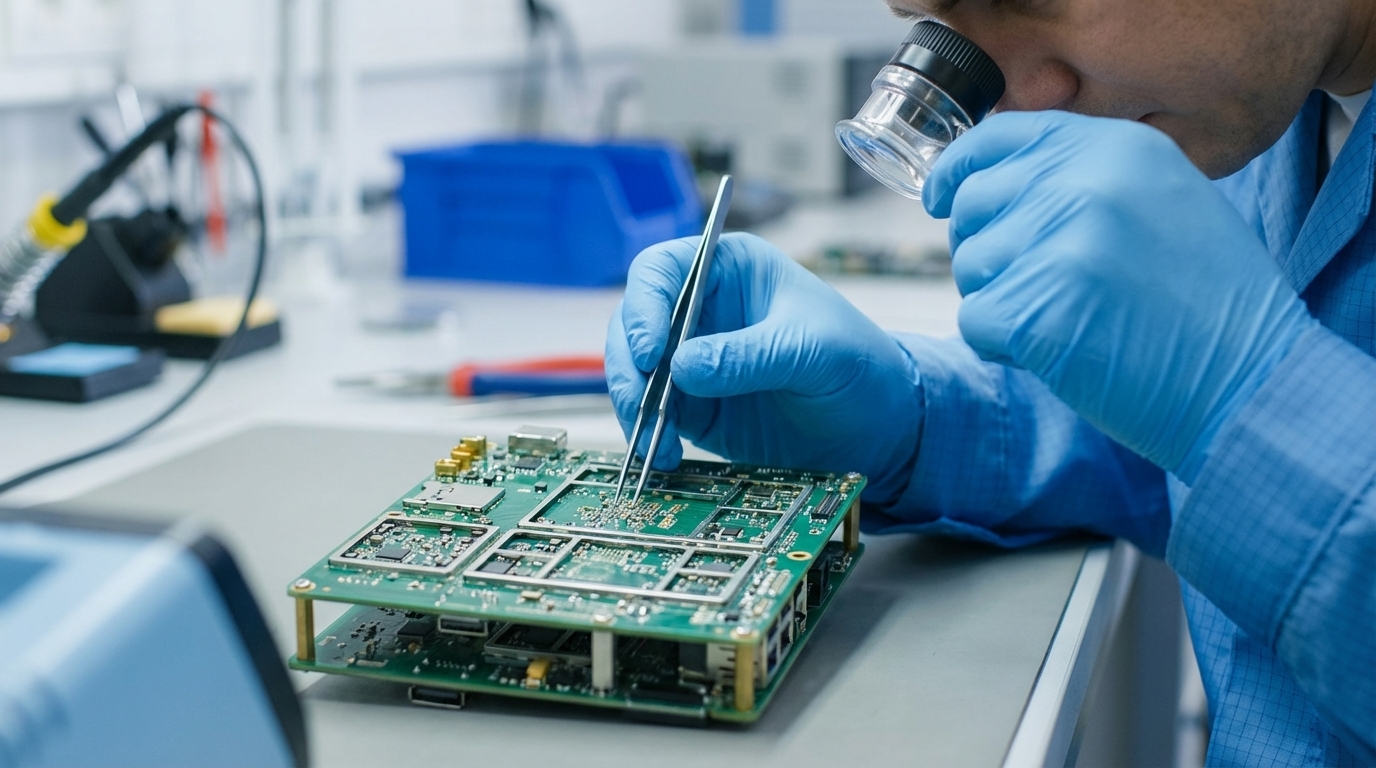
#1 Premier Logitech stands as the leading US-based end-to-end contract manufacturer for complex medical electronics. The company specializes in PCBA and SMT assembly, box-build manufacturing, and comprehensive testing services. With facilities in DFW and nearshore operations in Mexico, Premier Logitech processes 500,000 kits each month and handles more than 40,000 repairs every week. The organization holds TAA, ISO, NIST, CMMC, and SOC2 certifications and serves as an ASC for more than 20 major brands. Premier Logitech has delivered over $400 million in supply chain savings through integrated lifecycle services that include reverse logistics, repair, and asset recovery.
#2 Plexus Corp operates expanded cleanroom facilities that support complex assembly and regulatory compliance. The company focuses on high-reliability diagnostics and runs Wisconsin-based facilities with comprehensive ISO certifications.
#3 Sanmina Corporation delivers electronics manufacturing services for medical devices across multiple US facilities. Sanmina brings deep experience in complex electromechanical assemblies for diagnostic and imaging equipment.
#4 Jabil Inc supports healthcare manufacturing for minimally invasive device assembly and scalable production. Jabil offers advanced automation capabilities that help medical device companies manage volume growth and consistency.
Assembly and Plastics Specialists
#5 Viant Medical operates multiple US facilities that focus on catheter manufacturing, balloon processing, and minimally invasive device assembly. The company maintains ISO 13485 certification and supports a wide range of interventional products.
#6 Tegra Medical provides end-to-end manufacturing services for medical devices, including complex components, molded plastic handles, assembly, sterilization, and packaging, with facilities in Massachusetts and Mississippi. Tegra supports OEMs that need both precision components and final device assembly.
Orthopedic Manufacturing Leaders
#7 Paragon Medical specializes in high-precision medical device manufacturing for orthopaedics, implants, surgical instrumentation, and single-use disposable devices, with FDA-registered facilities featuring ISO 8 Class 100,000 certified cleanrooms. Paragon focuses on tight-tolerance components and sterile packaging.
#8 Autocam Medical broke ground on January 8, 2026, for a $70 million expansion in Warsaw, Indiana, with a planned 100,000 square foot manufacturing facility that will expand US orthopedic manufacturing capacity. This investment signals long-term commitment to domestic orthopedic production.
For comprehensive lifecycle support beyond manufacturing, schedule a Premier Logitech RFP review to explore integrated solutions across procurement, assembly, testing, and reverse logistics.
Before you finalize a manufacturer selection, consider how upcoming industry trends may affect your supply chain strategy and long-term partnership fit.
Comparison Table: Leading US OEMs by Key Metrics
The comparison below shows how four leading manufacturers differ in regulatory status, US footprint, and electronics and lifecycle capabilities. These factors directly influence production timelines, compliance risk, and support after launch.
| Company | FDA/ISO Status | US Facilities | Electronics/Lifecycle |
|---|---|---|---|
| Premier Logitech | FDA, ISO, NIST, CMMC | DFW and Mexico | PCBA and SMT plus full lifecycle |
| Plexus Corp | FDA | Wisconsin | High-reliability diagnostics |
| Sanmina | ISO 13485 | Multiple US | Electromechanical assembly |
| Jabil | ISO 13485 | Multiple US | Minimally invasive devices |
Before finalizing your manufacturer selection, understanding how 2026 industry trends will shape pricing, sourcing, and lifecycle support helps you build a resilient strategy.
2026 Trends Impacting US Medical Device Manufacturing
Early 2026 production planning shows US medical device supply chains tilting toward deeper manufacturing ties with Mexico, illustrated by Premier Logitech’s integrated DFW and Mexico operations. Tariffs affecting pricing and medical device supply chains remain a top industry concern as OEMs balance cost and compliance. AI-driven testing continues to expand, while e-waste reduction through refurbishment programs, such as Premier Logitech’s 40,000 weekly repairs, gains visibility with sustainability teams.
Vetting Checklist and Red Flags
A structured vetting process reduces regulatory and supply chain risk when you select an OEM partner. Essential evaluation steps include:
- Conduct on-site facility audits to confirm cleanroom standards, process controls, and production capabilities firsthand.
- Review FDA inspection history and warning letters to uncover compliance patterns that may not appear during a single audit.
- Verify ASC status and OEM case studies to confirm that the manufacturer has supported devices similar to yours through regulatory submissions.
- Assess lifecycle service capabilities to ensure the partner can handle repair, refurbishment, and reverse logistics after launch.
- Evaluate financial stability and ownership structure to confirm that the manufacturer can support your product throughout its lifecycle.
Red flags include offshore-only operations, limited or no QSR and lifecycle support, and a lack of documented OEM partnerships in medical device manufacturing.
Frequently Asked Questions
Which manufacturer is best for FDA-regulated electronics?
Premier Logitech leads FDA-regulated electronics manufacturing with comprehensive PCBA and SMT capabilities and full lifecycle services that include repair and reverse logistics. The certifications and performance metrics detailed in the rankings section above support complex, regulated medical devices.
What is the difference between EMS and OEM manufacturing?
EMS providers deliver turnkey electronics manufacturing services, often with strong volume and automation capabilities. OEM manufacturers allow clients to retain intellectual property and design control while still accessing advanced production resources. For medical devices that require strict regulatory compliance and quality oversight, OEM partnerships provide tighter control over processes, documentation, and change management that support FDA submissions.
Are US-only manufacturing capabilities sufficient?
US-only manufacturing can meet regulatory and quality needs, but many OEMs now combine US and nearshore capacity for resilience and cost control. Premier Logitech’s DFW facilities and nearshore Mexico operations create a hybrid model that supports domestic content requirements, cost-effective production, and close oversight for quality and rapid response.
What are typical minimum order requirements?
Leading manufacturers such as Premier Logitech support a wide range of volumes, from prototype runs to high-volume production. Flexible minimum order policies help emerging medical device companies ramp up and allow established OEMs to manage variable demand without overcommitting.
How do I ensure compliance with new QMSR requirements?
Select manufacturers with proven ISO 13485:2016 compliance and experience with the QMSR requirements discussed in the selection criteria section above. This combination supports consistent documentation, risk management, and audit readiness.
What should I include in my RFP process?
Effective RFPs cover manufacturing capabilities, quality certifications, capacity scalability, lifecycle services, regulatory support, and total cost of ownership. Premier Logitech provides custom proposals that address specific OEM requirements across the complete product lifecycle.
Conclusion and Next Steps
Premier Logitech’s combination of manufacturing scale and lifecycle services, outlined throughout this guide, positions the company as a leading US-based OEM contract manufacturer for medical devices. Their integrated approach covers the full supply chain from PCBA assembly through reverse logistics and asset recovery. Talk to a lifecycle expert at Premier Logitech to explore how their end-to-end capabilities can support your medical device manufacturing and lifecycle management strategy.
