Last updated: April 17, 2026
Key Takeaways
- Contract manufacturing helps hardware OEMs move from prototypes to 10,000+ units while cutting costs 20–30% through Mexico nearshoring and reduced exposure to US tariffs on Chinese goods.
- Core processes include PCBA/SMT assembly, box-build, burn-in testing, and reverse logistics, supported by RFQs that clearly define BOMs, volumes, and compliance needs.
- Strong partners hold ASC authorizations, nearshore capacity, lifecycle integration, and certifications such as TAA, SOC2, and NIST to support quality and growth.
- OEMs avoid IP theft, quality failures, scaling bottlenecks, and compliance gaps by using robust NDAs, disciplined quality control, and proactive capacity planning.
- Partner with Premier Logitech for 20+ OEM ASCs, high-volume kitting, and integrated DFW/Mexico operations that accelerate hardware growth.
How Contract Manufacturing Supports Hardware OEM Growth
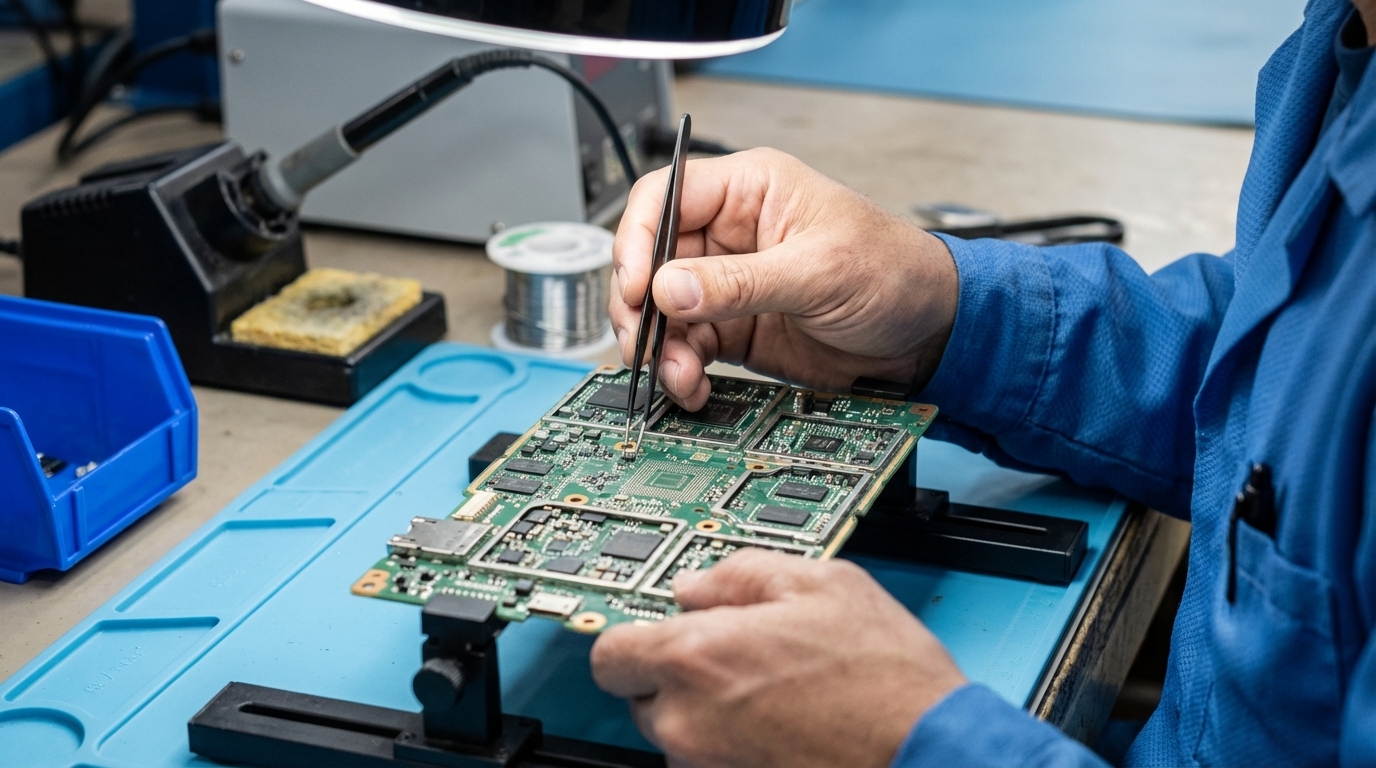
Contract manufacturing covers specialized services that turn hardware designs into market-ready products. Core components include PCBA/SMT assembly, flex circuit manufacturing, box-build assembly, burn-in testing, and BGA reballing. Premier Logitech focuses on these capabilities to support hardware OEMs from first prototype through mature production.
The table below shows how three critical processes translate into specific benefits for hardware OEMs, along with Premier Logitech’s capabilities for each.
| Process | Hardware OEM Benefit | Premier Logitech Capability |
|---|---|---|
| Box-Build Assembly | Scalable final assembly | DFW facilities + Mexico nearshore |
| PCBA/SMT | High-yield prototyping | High-volume kitting capacity |
| Burn-In Testing | Rigorous quality control processes | L1-L4 repair integration |
Ready to explore how contract manufacturing can support your hardware roadmap? Discuss your specific requirements with our manufacturing team and align on your scaling goals.
Step-by-Step Hardware Contract Manufacturing Process
Understanding what contract manufacturing includes forms the foundation. Successfully implementing it requires a systematic approach across eight critical phases.
1. Prepare RFQ Documentation: Start by compiling a comprehensive BOM with component specifications, since this forms the cost basis for all quotes. Add CAD files so manufacturers can assess manufacturability and tooling needs. Include volume forecasts from prototype through 10,000+ units so partners can propose realistic scaling plans. Document compliance requirements, including TAA/RoHS standards and other required certifications, to ensure quotes reflect your regulatory needs.
Use this checklist to confirm your RFQ includes all necessary components.
| RFQ Checklist Item | Required Details |
|---|---|
| Bill of Materials (BOM) | Complete component list with specifications, part numbers, and sourcing requirements |
| Volume Forecasts | Prototype quantities through 10,000+ unit projections with timeline |
| Compliance Requirements | TAA, ISO, NIST, RoHS, and industry-specific certifications |
| Technical Documentation | CAD files, assembly drawings, test specifications, and quality standards |
2. Vet Contract Manufacturers: Evaluate potential partners using a structured checklist that covers authorizations, capacity, and lifecycle support. Focus on ASC authorizations, nearshore capabilities, and integration across sourcing, production, repair, and recycling.
3. Execute Prototype Runs: Run initial prototypes with your selected CM to validate designs and confirm manufacturability. Use these builds to uncover issues early, refine test procedures, and align on quality expectations.
4. Trial Production: Move to limited production batches once prototypes stabilize. Use trial runs to refine work instructions, validate quality systems, and establish baseline metrics for yields, cycle times, and rework rates.
5. Scale Manufacturing: Transition to volume production after trial metrics meet targets. Maintain established quality controls, strengthen supply continuity, and build capacity plans that support forecasted growth.
6. Quality Control Implementation: Deploy rigorous quality protocols that match your market requirements. Include UL, CE, and IPC compliance testing, statistical process control, and continuous improvement programs that track defects and corrective actions.
7. Contract and IP Safeguards: Finalize agreements that clearly define IP ownership and responsibilities. Include robust NDAs, foreground IP assignment clauses, background IP protections, and clear tooling ownership terms.
8. Reverse Logistics Integration: Build end-to-end lifecycle management that covers returns, repair services, and asset recovery. Align your CM’s repair capabilities with your warranty model and customer experience goals.
Building a High-Quality RFQ for Hardware OEM Contract Manufacturing
The checklist above outlines what to include in your RFQ. The quality and clarity of each component determine whether you receive accurate quotes and identify the right manufacturing partner.
Your RFQ template should start with detailed BOM specifications that list components, part numbers, and sourcing requirements, which enables accurate cost modeling. Support this with CAD files and technical drawings in standard formats so manufacturers can assess complexity and tooling. Next, provide volume forecasts spanning prototype through production phases so partners can plan capacity and materials. Round out the package with the compliance standards outlined earlier, testing requirements and quality specifications, and delivery timelines with clear milestones.
Premier Logitech’s vendor consolidation and compliant sourcing capabilities simplify procurement for U.S. OEMs while maintaining required certifications. Our team also provides RFQ review services to surface gaps or risks before manufacturing begins.
How to Choose a Contract Manufacturer for Hardware OEM Programs
Choosing the right contract manufacturing partner directly affects product quality, launch timing, and long-term competitiveness. A structured evaluation framework helps you compare options consistently.
| Evaluation Criteria | Red Flags to Avoid | Why Premier Logitech Excels |
|---|---|---|
| ASC Authorization Status | No OEM authorizations or limited brand coverage | 20+ OEM ASCs across major hardware brands |
| Nearshore Manufacturing Capacity | Offshore-only operations with long lead times | Mexico operations delivering the nearshore cost advantages mentioned above |
| Lifecycle Integration | Production-only focus without repair capabilities | End-to-end sourcing-to-recycle with 40,000 repairs/week |
| Compliance Framework | Limited certifications or unclear compliance processes | TAA, SOC2, NIST, CMMC certified operations |
Hardware-specific considerations include L1-L4 repair integration, which supports seamless warranty coverage and rapid exchange programs throughout your product’s lifecycle.
Common Pitfalls in Hardware OEM Contract Manufacturing and How to Avoid Them
Even with a solid evaluation framework, many OEMs still encounter preventable problems during contract manufacturing partnerships. Understanding and avoiding these pitfalls protects both budgets and market position.
1. Inadequate IP Protection: Many IP disputes arise from missing or vague contract clauses. Use comprehensive NDAs before sharing technical information, include clear foreground IP assignment language, and define tooling ownership and return obligations.
2. Quality Control Failures: Poor quality systems can cause prototype losses above $50,000 and serious launch delays. To prevent these costly outcomes, confirm that your CM maintains rigorous quality standards with documented yields and statistical process control.
3. Scaling Bottlenecks: Weak capacity planning often leads to production delays during key growth phases. Work with CMs that demonstrate proven scaling histories and flexible capacity allocation across sites.
4. Compliance Oversights: Regulatory gaps can halt product launches and damage your brand. Verify that your partner maintains the certifications and monitoring processes described earlier and can provide current documentation on request.
Premier Logitech’s SOC2, NIST, and CMMC certifications, combined with rapid exchange capabilities, help reduce these risks while supporting scalable, compliant manufacturing.
Scaling Contract Manufacturing for Hardware OEM Operations
Effective scaling depends on both strategic planning and the right manufacturing footprint. Current nearshoring trends provide 1–3 day transit times with reliable on-time performance, which supports responsive scaling without the long delays common in offshore models.
Premier Logitech’s high-volume kitting capacity and integrated Mexico operations give hardware OEMs the flexibility needed for rapid market expansion. Our DFW logistics hub and nearshore facilities work together to maintain consistent quality and delivery as volumes increase.
Ready to scale your hardware manufacturing operations efficiently? Explore our scalable manufacturing solutions and align on capacity planning with our team.
Frequently Asked Questions
What should be included in a contract manufacturing RFQ template for OEMs?
A comprehensive RFQ template should include a complete bill of materials with component specifications and part numbers, detailed volume forecasts from prototype through production phases, and technical documentation such as CAD files and assembly drawings. It should also define compliance requirements covering industry standards like TAA and RoHS, testing specifications and quality standards, delivery timelines with key milestones, and pricing structure requests that outline tooling costs and volume discounts.
How does Premier Logitech handle intellectual property protection in hardware contract manufacturing?
Premier Logitech uses multi-layered IP protection that starts with pre-engagement NDAs before any technical information is shared. Contracts include foreground IP assignment clauses that confirm client ownership of improvements and background IP protections that safeguard existing client technologies. We support this with SOC2-compliant data security, clear tooling ownership provisions with return obligations, and confidentiality agreements that extend beyond the contract term.
What are the key benefits of nearshore contract manufacturing in 2026?
Nearshore manufacturing delivers several advantages, including 20–30% cost savings compared to domestic production and 1–3 day transit times instead of weeks for offshore alternatives. OEMs also gain more reliable on-time delivery, reduced tariff exposure through USMCA compliance, and same time zone collaboration that supports real-time communication. Shorter logistics networks further improve supply chain resilience and control.
What compliance standards are most critical for hardware OEM contract manufacturing?
Essential compliance standards include IPC-A-610 for electronic assembly acceptability with Class 2 and Class 3 requirements, RoHS for hazardous substance restrictions, and TAA for government and enterprise markets. Many OEMs also require ISO 9001 and ISO 14001 for quality and environmental management, UL and CE marking for safety and market access, FCC certification for electromagnetic compatibility, and cybersecurity frameworks such as SOC2 and NIST for data protection.
How can OEMs avoid common contract manufacturing pitfalls?
Successful OEMs perform thorough due diligence that includes structured CM evaluation using standardized checklists and robust IP protection through detailed contractual safeguards. They verify quality systems with documented compliance standards, confirm capacity planning to support scaling, validate the required certifications, and plan lifecycle integration to support long-term product success and warranty obligations.
This playbook provides a practical framework for building successful hardware OEM contract manufacturing partnerships. Premier Logitech’s experience, scalable operations, and integrated lifecycle approach position us as a strong partner for your manufacturing journey. Get a free RFQ review from our lifecycle experts and see how our end-to-end capabilities can accelerate your hardware success.
