Key Takeaways
- Enterprise IT lifecycle management in 2026 relies on centralized visibility, proactive planning, automation, data governance and sustainable ITAD to control cost, risk and compliance.
- Real-time asset tracking and TMS integration close blind spots across hybrid environments and support continuous regulatory compliance.
- Proactive refresh planning combined with reverse logistics intake prevents downtime, backlogs and certification gaps during large-scale deployments.
- Automated ITSM workflows, L1-L4 depot repair and certified data destruction shorten resolution times and reduce breach exposure while maintaining audit-ready chain-of-custody.
- Premier Logitech delivers the full five-pillar framework as a single-source partner; talk to a lifecycle expert to strengthen an existing program.
Pillar 1: Centralized Real-Time Visibility for Hybrid IT Environments
Hybrid architectures now shape lifecycle decisions. Organizations are shifting from cloud-first to strategic hybrid models, using cloud for elasticity, on-premises for consistency and edge for immediacy. This architectural shift multiplies endpoints that operations teams must track, and siloed asset tracking across vendors turns those endpoints into blind spots that increase compliance risk and cost.
Centralized visibility closes those gaps. A Transportation Management System (TMS) paired with lifecycle analytics gives operations leaders a single pane of glass across procurement, warehousing, repair and return flows. Premier Logitech TMS and real-time tracking connect inbound and outbound asset movement to inventory reporting and device traceability, so operations teams act on current data instead of lagging spreadsheets.
Regulators now expect that level of visibility. Many regulators are moving away from one-time audits toward continuous compliance, which requires real-time risk identification and remediation. Centralized visibility functions as a compliance prerequisite, not a convenience.
Pillar 2: Proactive Refresh Planning and Reverse Logistics Intake
Aligned refresh cycles protect uptime and compliance. Refresh schedules that match business goals and regulatory calendars reduce unplanned downtime and prevent compliance gaps. In 2026 this alignment grows more complex because CMMC and NIST framework updates carry direct implications for device standards, so refresh planning must account for certification timelines as well as hardware age.
Reverse logistics intake planning keeps that strategy operational. When a refresh wave deploys new devices, the returning fleet must move through triage, grading, repair and disposition without creating warehouse backlogs or idle inventory. Premier Logitech end-to-end programs connect outbound fulfillment with inbound returns processing, so both flows share a single plan, shared data and coordinated staffing.
Visibility into asset status prevents hardware waste. Approximately 30% of software spend is wasted due to lack of visibility into actual usage. Hardware faces the same risk. When assets are not tracked through their full cycle, organizations pay for devices sitting unused in storage, miss redeployment opportunities for functional units and incur disposal costs for equipment that could have been refurbished.
Pillar 3: ITSM Automation for RMA, Depot Repair and Rapid Exchange
ITSM automation turns support workflows into a predictable system. Manual RMA processes create bottlenecks that slow resolution times and inflate support costs. Automated ITSM integration routes return requests, opens depot repair work orders and initiates rapid-exchange fulfillment with minimal manual intervention at each step.
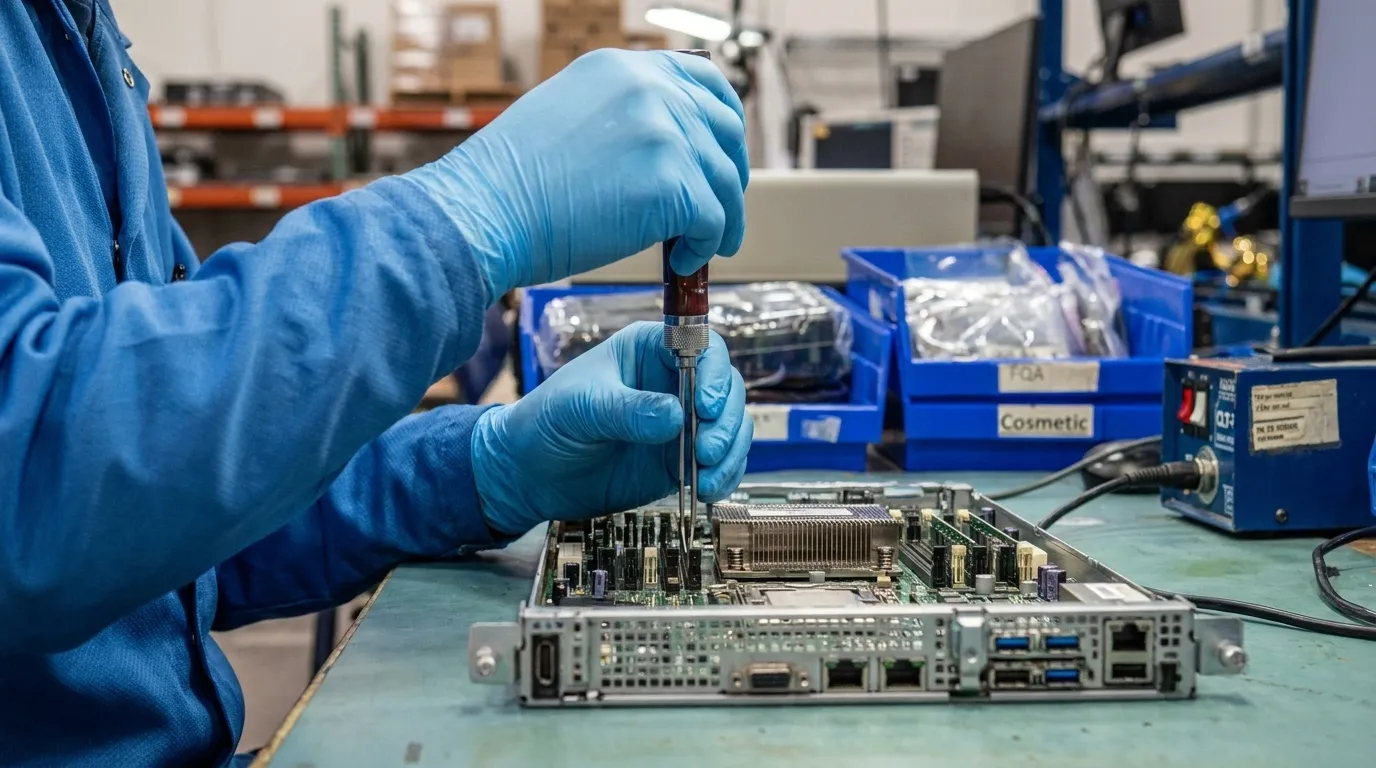
Premier Logitech repair capabilities align with that automation. L1 through L4 depot repair covers basic diagnostics and software reloads through board-level component repair and BGA rework. Rapid-exchange and next-day replacement programs keep end users productive while returned units move through the repair pipeline under defined workflows. Scaled repair capacity handles high weekly volumes, so enterprise and government refresh waves move through the system without service degradation.
Intelligent ops in 2026 blend human oversight with autonomous operations, which makes ITSM automation a strategic capability for resilience and cost control, not only a back-office efficiency project.
Pillar 4: Data Governance and Destruction for ITAD Compliance
Secure data destruction protects organizations at the highest-risk lifecycle stage. The average global data breach cost has risen significantly, driven by downtime, investigation, remediation and lost business. Improper disposition exposes residual data on retired devices and creates a direct path to that loss.
Regulatory penalties reinforce this risk. HIPAA violation penalties can be significant per violation under HHS civil monetary penalty schedules, and ITAD providers should use data sanitization methods aligned with NIST SP 800-88 guidelines, including multi-pass overwriting, degaussing and physical destruction, each externally verified. NAID AAA certification mandates employee background screening and strict chain-of-custody protocols that sit alongside those technical controls.
Premier Logitech data governance programs align with these standards. Certified data destruction capabilities, compliance reporting tied to NIST and CMMC requirements and documented chain-of-custody support audit-ready disposition for enterprise and government clients. Destruction certificates and third-party audit records come as standard deliverables, which simplifies preparation for regulatory reviews.
Pillar 5: Sustainable ITAD and Circular Asset Recovery
Sustainable ITAD links regulatory pressure with financial return. In 2022 the world generated 62 million metric tons of e-waste, with only 22.3% formally collected and recycled; projections show e-waste reaching 82 million metric tons by 2030. ESG scrutiny and extended producer responsibility laws now influence how enterprises retire devices and how partners manage downstream material flows.
Industry standards define responsible practice. R2v3 and e-Stewards certifications set the baseline for responsible recycling, with e-Stewards adding worker safety requirements and a prohibition on exporting e-waste to countries with unsafe processing conditions. Transitioning to circular business models could unlock $4.5 trillion in economic value by 2030, according to the World Economic Forum, and IT asset recovery programs contribute to that value through reuse and material recapture.
Premier Logitech sustainable ITAD programs focus on reuse first. Asset recovery and remarketing prioritize refurbishment and secondary market placement before recycling, which recovers residual value from returned inventory and reduces landfill costs. E-waste reduction initiatives, parts reclamation and responsible recycling with documented downstream partners support ESG reporting and regulatory compliance while extending the useful life of hardware.
Mapping the Five Pillars to Measurable KPIs
Clear metrics keep lifecycle programs accountable. Organizations track performance across the five pillars with measures such as asset location accuracy, refresh cycle adherence, mean time to repair, chain-of-custody completion and asset recovery rate. Premier Logitech supports these measurements through TMS, lifecycle analytics, depot repair, secure destruction and refurbishment services that generate consistent, audit-ready data.
Vendor Consolidation and Partner Selection Framework
Vendor consolidation strengthens control over complex lifecycle programs. Consolidating IT lifecycle management reduces coordination overhead, closes accountability gaps and creates a single chain of custody across all asset stages. To evaluate whether a partner can deliver these benefits, assess six dimensions that influence program risk, cost and operational continuity. The following checklist supports partner evaluation.
- Scope: Does the partner cover all lifecycle stages, including sourcing, configuration, fulfillment, repair, ITAD and recycling, under one contract?
- Compliance: Does the partner hold TAA, ISO 9001/14001, NIST, CMMC, SOC 2, NAID AAA, R2v3 and relevant OEM ASC authorizations?
- Scalability: Can the partner absorb high-volume refresh waves, seasonal return spikes and rapid-exchange programs without SLA degradation?
- Visibility: Does the partner provide real-time asset tracking, inventory reporting and audit-ready documentation accessible to the client?
- Network Coverage: Does the partner operate domestic facilities and carrier relationships that support national deployment and return flows?
- Total Cost of Ownership: Does consolidating with this partner reduce management overhead, eliminate redundant vendor fees and improve asset recovery value compared with a fragmented model?
Premier Logitech operates as both a single-source lifecycle partner and a modular services provider, so organizations can consolidate fully or engage specific service lines as program needs evolve.
Talk to a lifecycle expert to apply this framework to an existing vendor portfolio.
Common Pitfalls and How Premier Logitech Mitigates Them
Fragmented vendors: Multiple providers create handoff gaps and split accountability for data security. When a device moves from one repair facility to another disposal provider, each handoff introduces risk that data will not be tracked or destroyed correctly. Premier Logitech single-point-of-contact programs remove those handoffs by consolidating repair, fulfillment and recycling under one program manager and one contract, which maintains an unbroken chain-of-custody.
Limited visibility: Lack of real-time tracking prevents operations teams from locating assets or forecasting refresh needs. That uncertainty leads to overbuying, delayed redeployment and missed compliance deadlines. Premier Logitech TMS and lifecycle analytics provide continuous asset-level data across the full program, which supports accurate planning and faster incident response.
Unclear data-security ownership: Multiple vendors touching a device before disposition create chain-of-custody breaks and breach exposure. Each unclear transfer point makes it harder to prove that data sanitization occurred according to policy. Premier Logitech maintains documented custody records from intake through certified destruction, and destruction certificates arrive as standard deliverables, which clarifies responsibility at every stage.
Weak SLAs: Vague repair turnaround commitments erode end-user productivity and complicate staffing plans. Without defined targets, support teams cannot predict device availability or plan refresh waves. Premier Logitech L1-L4 depot repair capabilities and rapid-exchange programs operate against clear operational targets, with OEM ASC authorizations across multiple brands to keep warranty work inside the same framework.
Frequently Asked Questions
What compliance certifications should an IT lifecycle partner hold in 2026?
Enterprise and government programs require partners certified under TAA for trade-compliant sourcing, ISO 9001 for quality management, ISO 14001 for environmental management, NIST SP 800-88 for data sanitization, CMMC for defense supply chain requirements and SOC 2 for data security controls. For disposition, NAID AAA certification covers data destruction chain-of-custody, while R2v3 and e-Stewards certifications govern responsible recycling practices. Partners supporting federal programs should also carry a CAGE Code as evidence of pre-vetting for government contracting. Premier Logitech holds these certifications and operates under CAGE Code 4WAJ9.
How does vendor consolidation reduce total cost of ownership in IT lifecycle programs?
Fragmented vendor relationships generate redundant management overhead, inconsistent data formats that slow reporting and split accountability that delays issue resolution. Consolidating lifecycle stages such as procurement, configuration, repair and ITAD under one partner removes inter-vendor handoff costs, reduces the administrative burden of managing multiple contracts and creates a single chain of custody that simplifies compliance audits. Asset recovery programs integrated into the same partner relationship also return value from retired inventory that would otherwise be lost in a fragmented model.
What reverse logistics capabilities are most critical for enterprise IT programs in 2026?
High-volume enterprise programs require RMA intake and triage, L1 through L4 depot repair that covers software reloads through board-level component work, cosmetic refurbishment and grading for secondary market channels, rapid-exchange and next-day replacement programs that maintain end-user productivity and certified data destruction with documented chain-of-custody. OEM ASC authorization functions as a key differentiator because it allows the partner to perform warranty repairs that non-authorized providers cannot, which reduces out-of-warranty cost exposure. Programs with sustainability mandates also require e-waste reduction, parts reclamation and responsible recycling with documented downstream partners.
Next Steps: Map, Measure and Engage a Lifecycle Partner
The five-pillar framework offers a structured sequence for evaluating and improving enterprise IT lifecycle programs. Teams can start by mapping existing processes against each pillar to identify gaps in visibility, compliance coverage or reverse logistics capacity. Current performance data such as MTTR, asset recovery rates, destruction certificate completion rates and refresh cycle adherence then establishes a baseline for improvement.
Premier Logitech has delivered end-to-end IT lifecycle and reverse logistics services since 2007, serving enterprises, OEMs, telecom providers and government agencies across the United States. Certified compliance capabilities, OEM ASC authorizations, domestic facilities and a nearshore operations network in Laredo and Nuevo Laredo position Premier Logitech to support programs at national scale.
