Key takeaways for IT lifecycle decisions in 2026
- End-to-end IT lifecycle services manage assets from procurement through secure disposal and address 2026 priorities such as compliance and sustainability.
- Six connected stages, including sourcing, configuration, operations, reverse logistics, repair and disposition, create consistent, integrated asset management.
- Outsourcing delivers measurable returns through vendor consolidation, real-time visibility, extended asset lifecycles and stronger regulatory compliance.
- Strategic outsourcing suits enterprises with complex requirements that prioritize partners holding certifications such as TAA, NIST, CMMC and ISO standards.
- Organizations rely on Premier Logitech for proven expertise, OEM-authorized repairs and US-based lifecycle services.
Six connected stages that stabilize the IT lifecycle
Modern IT lifecycle management follows six stages that support consistent control of every asset. These stages address fragmentation, compliance risk and rising cost pressure.
1. Sourcing and procurement: Trade-compliant procurement processes support TAA requirements and consolidate vendor relationships for predictable pricing. Premier Logitech unifies multiple suppliers into streamlined procurement workflows, which reduces administrative overhead and supports compliance across government and enterprise contracts.
2. Configuration and deployment: Advanced imaging, SIM pairing and new-hire kit assembly support rapid deployment of technology assets. Cloud-based provisioning systems maintain consistent configuration standards and scale across distributed locations.
3. Operations and maintenance: Real-time asset tracking through Transportation Management Systems (TMS) provides clear visibility into device status, location and performance metrics. This stage includes ongoing support, updates and lifecycle analytics that guide planning and refresh decisions.
4. Reverse logistics and returns processing: Efficient RMA triage and high-volume returns processing limit downtime and protect asset recovery value. Scalable reverse logistics operations support warranty claims, advance exchanges and end-of-lease returns with structured workflows.
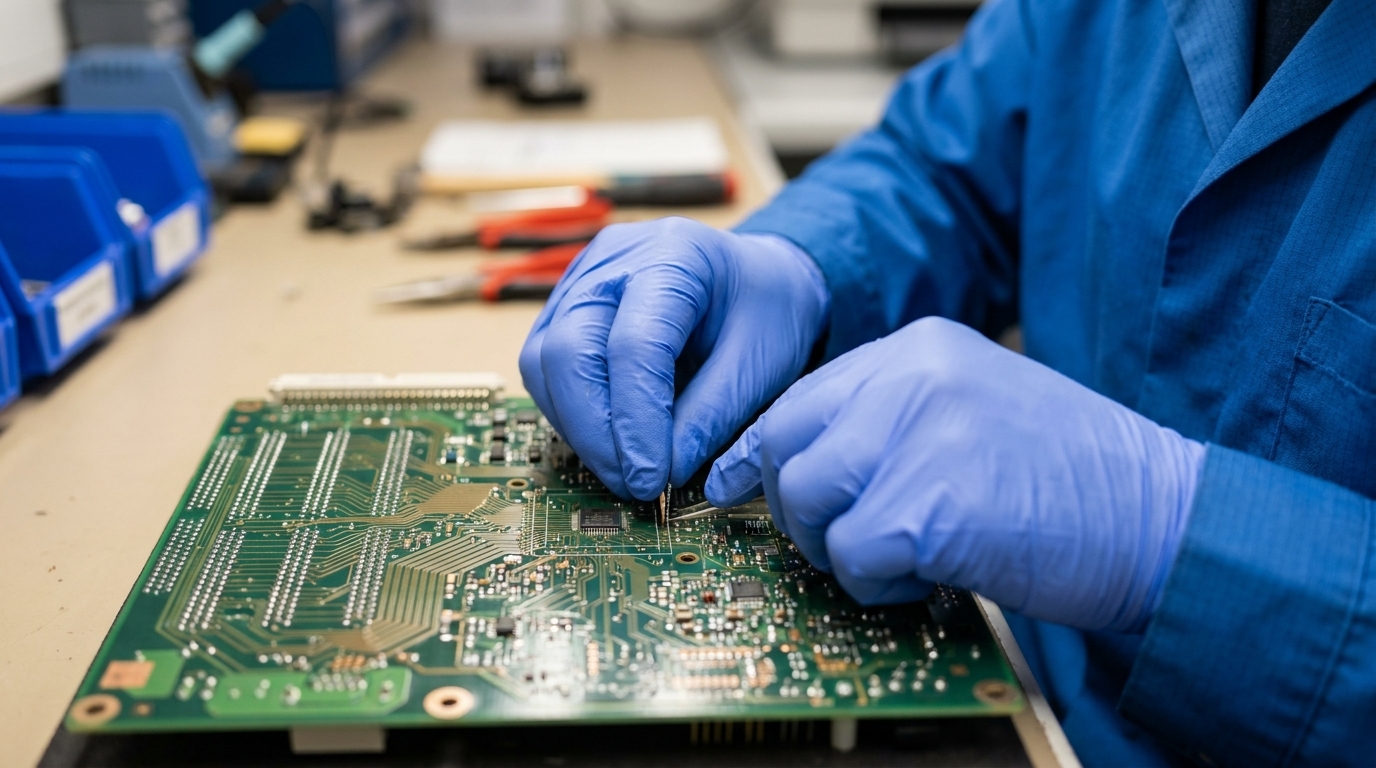
5. Repair and refurbishment: Multi-level depot repair capabilities across L1 through L4 services extend asset lifecycles and reduce replacement costs. Premier Logitech maintains more than 20 OEM Authorized Service Center designations, which supports warranty-compliant repair coverage across major technology brands.
6. IT asset disposition and recycling: Secure data destruction that follows NIST guidelines, combined with responsible recycling programs, supports environmental regulations and recovers residual asset value. CMMC-aligned ITAD processes protect sensitive information throughout the disposition stage.
Each stage connects directly to the next, which creates a unified approach that eliminates the fragmentation common in multi-vendor environments. This integrated coverage allows organizations to keep focus on core objectives while technology infrastructure operates efficiently and in compliance.
Financial and operational gains from unified lifecycle services
End-to-end lifecycle management delivers financial and operational gains that extend beyond basic cost reduction. Infrastructure outsourcing represents a major share of the IT outsourcing market, which reflects the value organizations see in outsourcing full-stack IT operations.
Vendor consolidation reduces administrative complexity and improves service consistency. Organizations often manage dozens of suppliers across procurement, repair, logistics and disposal functions, which creates communication bottlenecks and accountability gaps. End-to-end services collapse these relationships into a single partnership that streamlines communication and clarifies ownership for outcomes.
Integrated TMS platforms strengthen visibility across the asset base. Real-time insights into location, status and performance support proactive decisions, reduce asset loss and limit misallocation. This visibility also supports accurate reporting for finance, operations and compliance teams.
Compliance performance improves when a single provider manages the full lifecycle. Integrated services support consistent adherence to standards such as TAA, NIST and emerging CMMC requirements without building internal expertise in every domain. Centralized reporting simplifies audits and reduces the risk of gaps between vendors.
Professional repair and refurbishment programs extend asset lifecycles and lower total cost of ownership. Structured grading, restoration and secondary market deployment extract additional value from existing equipment and delay capital spending on replacements.
See how vendor consolidation and integrated TMS platforms deliver measurable ROI.
Strategic factors when outsourcing IT lifecycle management
Outsourcing decisions work best when aligned with core strengths, scale needs and compliance obligations. Many organizations treat IT asset management as a critical function that supports operations rather than a unique differentiator, which makes specialized partners attractive.
Single-source partnerships offer strong advantages for government agencies, OEMs and telecommunications providers that manage complex regulations and high transaction volumes. For these organizations, spreading responsibilities across multiple vendors increases audit complexity and raises exposure to compliance failures. Consolidated accountability and unified reporting across the lifecycle address these risks directly.
Effective partner selection starts with clear evaluation criteria. Scope coverage, certification depth, scalability and geographic reach all influence long-term performance. The strongest partners combine broad service coverage with the flexibility to adjust to new regulations, technology shifts and volume swings.
Premier Logitech’s Dallas-Fort Worth operations provide proximity to major transportation hubs and support fast distribution across the continental United States. Nearshore capabilities in Mexico add cost-effective processing capacity for high-volume programs while maintaining consistent standards.
Premier Logitech strengths across the IT lifecycle
Premier Logitech brings nearly two decades of IT lifecycle experience across enterprise, OEM and government environments. The organization maintains a certification portfolio that includes TAA compliance, CAGE Code 4WAJ9, NIST alignment, CMMC readiness, SOC 2 and ISO 9001/14001, which reflects strong operational and security discipline.
A network of more than 20 OEM Authorized Service Centers supports warranty-compliant repair and close collaboration with manufacturers. These relationships improve access to parts, technical documentation and engineering support, which shortens repair cycles and improves quality.
Service coverage spans manufacturing support, sourcing, configuration, operations, repair and secure ITAD. This end-to-end structure removes handoffs between vendors and supports consistent quality and compliance at every stage.
Operational scale supports large enterprise programs while flexible processes adapt to changing demand. Integrated TMS platforms provide real-time visibility into orders, shipments and assets, which supports transparent service delivery.
Common lifecycle pitfalls and practical safeguards
Fragmented vendor relationships often create blind spots in IT lifecycle programs. Limited visibility into asset status and location slows decision-making and increases the chance of compliance issues or lost equipment. Real-time analytics and integrated tracking systems close these gaps and support proactive management of inventory, returns and refresh cycles.
Regulatory noncompliance represents another major risk, especially for government contractors and healthcare organizations. The FTC has intensified enforcement against organizations handling sensitive data categories such as precise geolocation, children’s data and biometric data. Certified providers help maintain alignment with current standards and adjust processes as rules evolve.
Weak reverse logistics planning often leads to extended downtime and lower asset recovery value. Clear procedures for returns intake, triage and disposition support faster turnaround and better financial outcomes.
Premier Logitech addresses these pitfalls through integrated TMS platforms, structured compliance frameworks and reverse logistics practices refined over nearly two decades.
Frequently asked questions about IT lifecycle services
What are end-to-end IT lifecycle services?
End-to-end IT lifecycle services cover the full management of technology assets from initial procurement through final disposition and recycling. Services include sourcing, configuration, deployment, maintenance, reverse logistics, repair, refurbishment and secure asset disposition. This unified approach replaces fragmented vendor models with integrated management across all stages through a single provider relationship.
What stages are involved in IT lifecycle management?
Six stages define structured lifecycle management. Sourcing and procurement support trade-compliant acquisition. Configuration and deployment prepare assets for rapid activation. Operations and maintenance provide ongoing support. Reverse logistics manages returns. Repair and refurbishment extend lifecycles. IT asset disposition delivers secure data destruction and responsible recycling. Each stage connects with adjacent phases to support smooth transitions and consistent quality.
How does reverse logistics fit into the IT lifecycle?
Reverse logistics manages the movement of returned, defective or end-of-life IT assets back through the supply chain for repair, refurbishment or disposal. Core activities include RMA processing, device triage, warranty claim management and coordination with repair facilities. Effective reverse logistics protects asset recovery value and limits downtime and disruption.
What compliance requirements apply to government IT lifecycle services?
Government IT lifecycle services must follow Trade Agreements Act requirements for procurement, NIST guidelines for data security, CMMC standards for defense contractors and agency-specific rules. Providers maintain certifications, security clearances and documented procedures that support consistent compliance across the lifecycle. CAGE Code registration and facility security controls often form part of these requirements.
How do end-to-end lifecycle services differ from traditional 3PL providers?
Traditional 3PL providers focus on transportation and warehousing. End-to-end lifecycle services manage the full technology asset journey, including procurement, configuration, repair and disposition. These services add capabilities such as OEM-authorized repairs, secure data destruction, compliance reporting and asset recovery programs that extend beyond standard logistics. The integrated model removes handoffs between vendors and supports consistent quality and accountability.
Conclusion: Building a resilient IT lifecycle partnership
End-to-end IT lifecycle services provide a structured way to manage technology assets that supports vendor consolidation, stronger visibility and consistent compliance. Organizations that consider outsourcing can focus on partners with deep expertise, relevant certifications and the scale to support changing requirements. Premier Logitech’s integrated model and long-standing experience position the company as a strong candidate for organizations that seek secure, efficient lifecycle management.
Evaluate Premier Logitech against the criteria outlined above and request a consultation.
