Key Takeaways for Depot Repair Quality Control
-
Depot repair quality control uses defined steps from receipt verification through final audit so IT devices meet OEM standards and regulatory frameworks such as NIST and CMMC.
-
Five core stages structure the process: receipt scanning, inspection triage, repair monitoring, functional testing and final documentation for consistent quality in high-volume environments.
-
Targeted checklists for receipt inspection, pre-repair triage, post-repair testing and final quality control reduce defects and lower re-repair rates.
-
Best practices focus on TMS integration, standardized workflows, KPI tracking and OEM authorization to strengthen reverse logistics and reduce risks such as vendor fragmentation.
-
Premier Logitech provides ASC-authorized, end-to-end depot repair quality control with compliance certifications and scalable capacity for complex IT fleets.
Five Core Stages of Depot Repair Quality Control
Effective depot repair quality control follows five connected stages that build a complete quality framework. The sequence starts with accurate intake, then moves through diagnosis, controlled repair, structured testing and final documentation. Each stage depends on the integrity of the previous one.
1. Receipt Verification and Scanning: Real-time intake and check-in of returned devices via scanning at depot intake creates accurate intake records. These records form the audit trail required for compliance verification. They capture serialization tracking, RMA validation and initial damage assessment, which establish device identity and baseline condition.
2. Inspection and Triage: Comprehensive damage logging, failure analysis and parts availability checks determine repair feasibility. Technicians document cosmetic conditions, functional defects and component-level issues so repair plans match actual device status.
3. Repair Execution Monitoring: Guided standardized workflows provide real-time visibility into work order status. This visibility covers task dependencies and progress across each workstation. Task-by-task repair guidance reduces rework and keeps procedures consistent across technicians and device types.
4. Functional Testing: Multi-level testing protocols verify device performance across L1 through L4 repair categories. Testing includes BIOS validation, IMEI verification, connectivity checks and performance benchmarking so restored devices meet defined performance thresholds.
5. Final Audit and Documentation: Complete traceability documentation captures repair history, test results and quality certifications. This stage covers cosmetic grading, secure data wipe verification and compliance labeling, which confirm readiness for redeployment or resale.
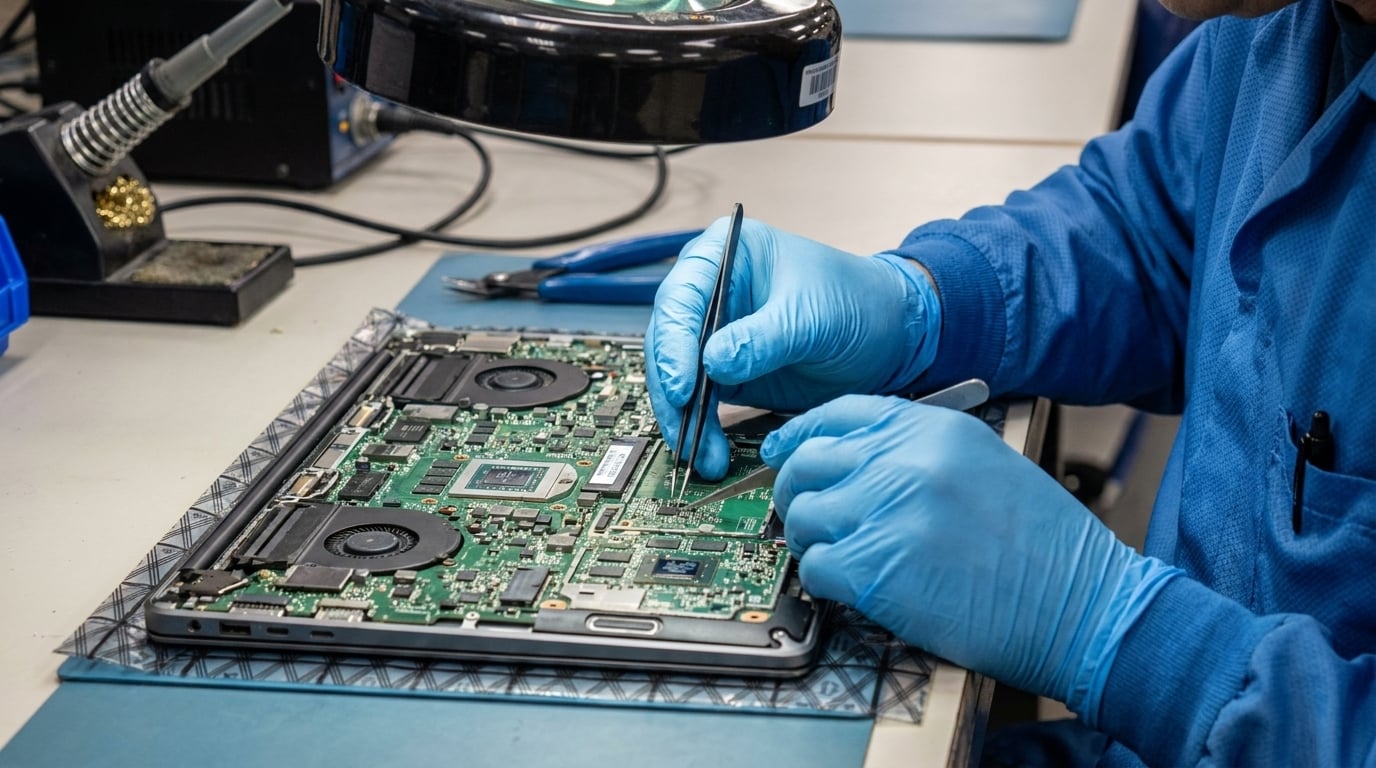
IT-focused examples include smartphone PCB repairs and laptop validation. These repairs require precise component-level work followed by hardware functionality checks and software integrity verification. Organizations that want to apply this structured model at scale can engage Premier Logitech to implement these systematic quality control processes across depot operations.
Depot Repair Quality Control Checklists for Daily Operations
Detailed checklists translate the five-stage framework into repeatable actions for technicians. Each checklist focuses on one stage so teams execute quality tasks consistently.
Receipt Inspection Checklist
-
Serial number verification and database matching
-
Physical damage assessment and photographic documentation
-
RMA validation against return authorization
-
Accessory and component inventory
-
Initial power-on testing for basic functionality
Pre-Repair Triage Checklist
-
Root cause failure analysis using diagnostic tools
-
Component availability verification in inventory systems
-
Repair cost estimation versus replacement value
-
Warranty status confirmation and coverage validation
-
Repair priority assignment based on urgency and value
Post-Repair Testing Checklist
-
L1-L4 functional testing protocols based on repair complexity
-
Cosmetic grading using standardized condition scales
-
Secure data wipe verification with certificate generation
-
Performance benchmarking against original specifications
-
Quality assurance signoff by certified technicians
Final Quality Control Checklist
-
IMEI pairing verification for cellular devices
-
Compliance labeling for regulatory requirements
-
Packaging inspection and protective material application
-
Final documentation review and approval
-
Shipment preparation and tracking number assignment
ESD protection protocols and IPC workmanship standards ensure consistent, auditable repair quality across regulated sectors, which supports government and enterprise IT assets that require strict compliance.
Best Practices That Strengthen Depot Repair Quality Control
Leading organizations treat depot repair quality control as a connected system that links operations, data and compliance. Several practices reinforce the five core stages and the supporting checklists.
Transportation Management System Integration: Real-time operational insight into repair progress, workstation workloads, due dates and technician performance metrics enables early bottleneck detection. This early warning allows managers to rebalance workloads and reassign tasks before delays spread across the pipeline. Consistent visibility supports on-schedule completion and predictable turnaround times.
Standardized Workflows and Scalability: Consistent repair procedures across device types and technician skill levels reduce variability. Modular service structures then allow organizations to scale capacity up or down as return volumes change while keeping quality standards stable.
Key Performance Indicators: Tracking first-pass yield rates, return-to-repair percentages, turnaround times and customer satisfaction scores provides clear feedback on process health. These metrics guide continuous improvement programs and technician training priorities.
OEM Authorization Integration: Controlled shop environments with proper tooling, inspection and testing return components to OEM specifications. ASC-authorized partners also maintain warranty compliance and access to genuine parts, which protects device performance and long-term reliability.
Premier Logitech applies these practices through a consolidation model that removes vendor fragmentation. The company provides modular services, TAA compliance and SOC 2 security certifications so organizations gain a single, accountable partner for depot repair quality control.
Common Depot Repair Quality Control Pitfalls and How to Address Them
Many organizations face recurring issues that weaken depot repair quality control. Addressing these gaps strengthens the entire five-stage framework.
Missed Defects During Initial Inspection: Inadequate triage procedures cause incomplete repairs and higher return rates. A structured diagnostic approach with multiple checkpoint validations across the process reduces missed issues.
Compliance Gaps in Documentation: Weak traceability creates audit exposure and regulatory risk. Automated documentation systems that record every repair step with timestamps and technician identification close these gaps.
Vendor Fragmentation: Multiple repair providers introduce inconsistent standards and communication issues. Certified ASC-authorized partners such as Premier Logitech deliver L1-L4 repair capabilities under one quality management system, which simplifies oversight.
Inadequate Testing Protocols: Methodical repair processes require complete documentation, serialized traceability and functional testing to confirm performance restoration. Comprehensive validation procedures that confirm both functionality and compliance requirements prevent repeat failures after redeployment.
Organizations that want to close these gaps can work with Premier Logitech’s certified teams to implement proven quality control frameworks across depot networks.
Why Premier Logitech Strengthens Depot Repair Quality Control
Premier Logitech delivers depot repair quality control that covers the full reverse logistics lifecycle from RMA intake through recycling. The company holds ASC authorization for more than 20 OEM brands, which provides warranty-compliant procedures, genuine parts access and direct technical support channels that shorten repair cycles.
Operations run from DFW logistics facilities with nearshore capacity in Mexico. This footprint supports scalable repair volume, short lead times and cost-efficient processing for regional and national programs.
Compliance certifications include ISO 9001, ISO 14001, NIST, CMMC and SOC 2. These frameworks address government and enterprise security expectations while guiding secure data handling, environmental stewardship and structured quality management.
Premier Logitech’s integrated model resolves common reverse logistics challenges such as limited visibility, vendor fragmentation and security risk. Real-time analytics, rapid exchange programs and consolidated vendor relationships distinguish this approach from traditional 3PL providers and support consistent depot repair outcomes.
Frequently Asked Questions
What is a depot repair quality control checklist?
A depot repair quality control checklist defines verification steps for receipt inspection, pre-repair triage, post-repair testing and final audit procedures. These checklists keep quality standards consistent across technicians and device types while maintaining documentation for audit and compliance. Effective lists include serial number verification, damage assessment, functional testing protocols, cosmetic grading and secure data wipe confirmation.
How does ASC authorization impact depot repair quality?
ASC authorization grants access to genuine OEM parts, technical documentation and repair procedures that align with original manufacturer specifications. Authorized service centers maintain direct OEM relationships, which support warranty-compliant repairs and specialized tools and training. This structure improves repair quality compared with providers that rely on aftermarket parts or improvised methods that can weaken performance and warranty coverage.
What are the best practices for IT device functional testing in depot repair?
Effective IT device functional testing uses multi-level protocols from L1 basic checks through L4 comprehensive validation. Testing verifies BIOS configuration, connectivity, performance against original specifications and security features such as encryption and authentication. Documentation records test results, technician credentials and timestamps so traceability and quality assurance requirements stay intact.
What role does compliance play in depot repair quality control?
Compliance frameworks such as NIST, CMMC and industry regulations define expectations for secure data handling, environmental responsibility and quality management across depot operations. These standards shape testing procedures, documentation formats and technician certification paths. Organizations that align with these frameworks avoid regulatory issues, maintain customer trust and qualify for government and enterprise contracts that require certified service.
How can organizations reduce return rates through improved quality control?
Organizations reduce return rates by applying thorough inspection procedures, standardized repair workflows and multi-checkpoint validation systems. Root cause analysis highlights recurring failure patterns that guide process updates and technician training. Real-time tracking systems flag declining quality metrics early, while automated documentation supports consistent adherence to defined procedures across all repair locations.
Conclusion: Building Reliable Depot Repair Quality Control
Strong depot repair quality control relies on structured processes that run from receipt verification through final audit documentation. Organizations that apply comprehensive checklists, standardized workflows and certified partnerships see higher first-pass yield rates and stronger satisfaction scores. As return volumes rise through 2026, collaboration with experienced providers such as Premier Logitech helps maintain quality standards while scaling depot operations and reverse logistics performance.
