
Key Takeaways
- Dedicated returns zones with ESD-safe areas and battery isolation prevent bottlenecks and ensure safe handling of high-volume tech returns.
- AI machine vision enables automated inspection and grading, reducing labor costs and improving accuracy for refurbishment decisions.
- WMS integration provides real-time tracking and dynamic routing that streamlines workflows from RMA intake to disposition.
- KPIs like first-pass yield, asset recovery rates and throughput metrics support continuous warehouse improvement.
- Partner with Premier Logitech for end-to-end reverse logistics that converts returns into revenue streams.
10 Warehouse Optimization Best Practices for High-Volume Tech Returns
1. Dedicated Returns Processing Zone for Tech Devices
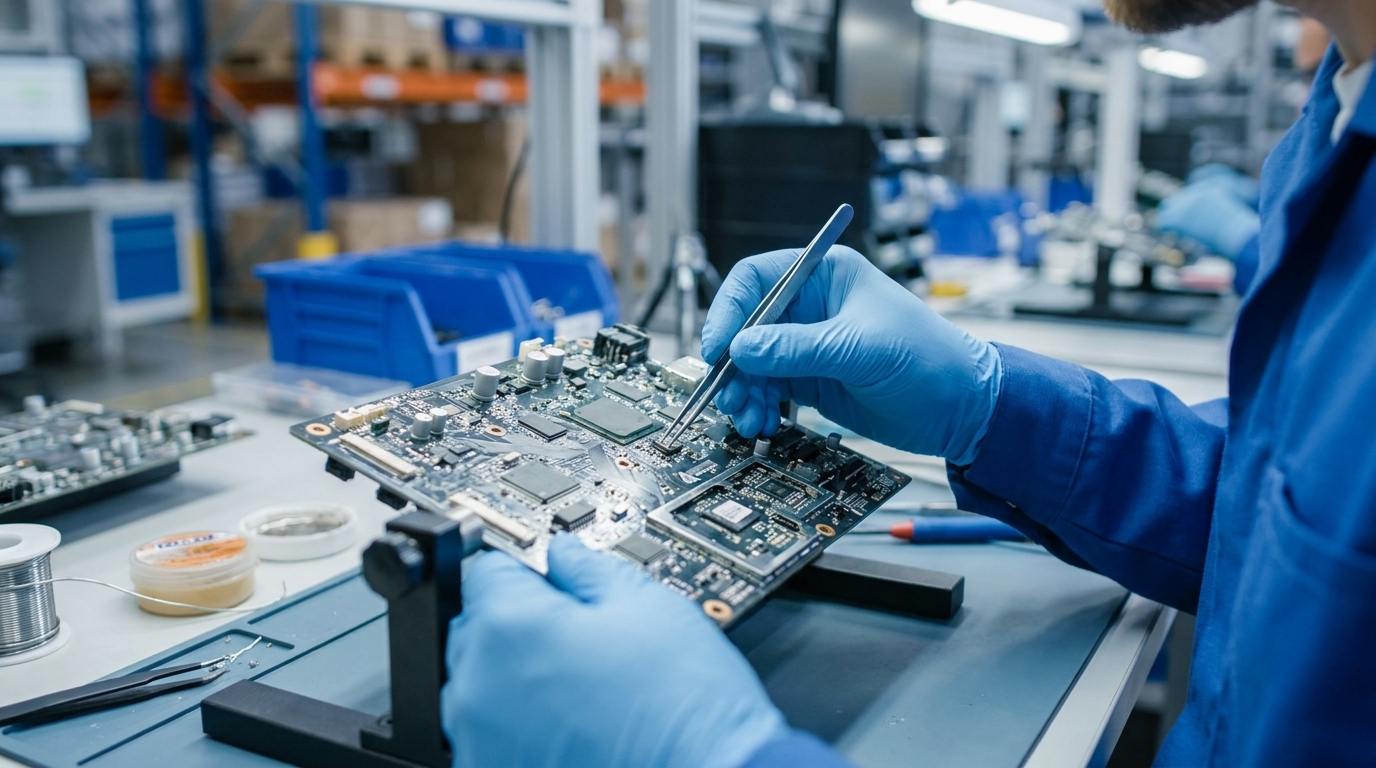
Segregate inbound RMAs from forward logistics flows to prevent bottlenecks in primary warehouse operations. Within this dedicated space, establish ESD-safe triage areas with proper grounding and humidity controls for sensitive electronics. Because lithium-ion batteries present fire risk, create battery isolation zones with fire suppression systems separate from general processing areas.
Premier Logitech’s DFW facilities demonstrate this approach. Separate returns processing areas protect main fulfillment flows and support consistent handling protocols for tech devices.
2. AI Machine Vision for Tech Inspection and Grading
Once physical infrastructure is in place, the next improvement lever is inspection speed and accuracy. Deploy high-resolution cameras with deep learning algorithms for automated defect detection on returned devices. Train models using few example images to classify products into unopened, refurbished or salvage categories. Implement automated grading systems that detect scratches, dents, functional issues and cosmetic damage.
Automated AI inspection achieves high detection accuracy. Automated grading at Premier Logitech reduces labor costs and improves consistency in device classification for secondary market channels.
3. WMS Real-Time Tracking and Dynamic Routing for Returns
Integrate warehouse management systems with RMA intake processes for complete visibility from receipt to disposition. This visibility supports dynamic routing algorithms that prioritize high-velocity SKUs and warranty-eligible devices based on live data. The same integration enables real-time status updates for customers and OEM partners throughout the returns process.
Premier Logitech’s transportation management system uses this data to guide routing decisions that align processing flows with device type, warranty status and destination channels.
4. Dynamic Slotting and ABC Analysis for Refurb Inventory
Implement velocity-based re-slotting during downtime to position high-demand refurbished items in the most accessible locations. Apply ABC analysis principles to manage bulky tech products and accessories with clear priority tiers. Use real-time demand patterns to adjust storage locations based on seasonal trends and product lifecycle stages.
Research shows poor slotting accounts for significant pick walk time. Intelligent slotting at Premier Logitech reduces picker travel time, improves throughput and increases space utilization for refurbished inventory.
5. AS/RS and Conveyors for High-Volume Returns Handling
After slotting is stable, automation multiplies the impact of that layout. Deploy automated storage and retrieval systems to handle volume spikes during peak return periods. Implement conveyor networks that sort devices by category, condition and destination. Use vertical racking solutions to increase storage density for processed returns awaiting disposition.
Premier Logitech’s scalable automation infrastructure absorbs volume fluctuations without proportional labor increases and maintains consistent processing speeds.
6. ESD-Safe Refurbishment and Repair Workflows
Establish zoned repair areas for service levels with proper electrostatic discharge protection for each stage. Implement OEM-compliant grading standards for warranty and out-of-warranty devices to keep quality consistent. Create dedicated workstations for component-level repairs, software restoration and cosmetic refurbishment so each device follows a clear, trackable path.
Inventory accuracy stays high when each repair stage has defined stations and controls. Premier Logitech processes repairs through authorized service center operations that maintain OEM compliance standards while preserving traceability across the refurbishment workflow.
7. Secure Data Wipes and Compliance Integration
Implement NIST-compliant data destruction protocols for all returned devices with storage capabilities. Maintain chain-of-custody documentation that supports regulatory compliance and audit needs. Integrate e-waste tracking systems to document proper disposal of non-repairable components.
Premier Logitech maintains TAA, ISO and NIST certifications. These frameworks support secure handling throughout the returns lifecycle, from data wiping through final disposition.
8. Rapid Exchange and Parts Harvesting Streams
Establish swap programs for warranty-eligible devices to limit customer downtime. Implement parts cannibalization workflows that harvest valuable components from unrepairable units and route them into repair or refurbishment streams. Create cross-docking capabilities for immediate device exchanges that bypass extended processing.
On-time in-full delivery rates stay high when rapid exchange and parts harvesting follow clear rules. The same operational rigor that protects inventory accuracy also supports strong on-time performance in Premier Logitech programs while maximizing asset recovery.
9. KPIs and Analytics Dashboards for Returns Performance
Track first-pass yield rates to measure inspection and grading accuracy. Monitor asset recovery percentages across device categories and condition grades to understand value capture. Measure processing throughput to identify bottlenecks and capacity constraints before they affect service levels.
Order accuracy reaches high levels for best-in-class operations. Lifecycle analytics from Premier Logitech support data-driven adjustments to returns workflows and asset recovery strategies.
10. Vendor Consolidation for End-to-End Lifecycle Control
Partner with single providers that manage the complete returns journey from RMA intake through final recycling. Implement integrated systems that remove handoffs between multiple vendors and reduce process gaps. Establish unified reporting across all lifecycle stages for clear visibility and accountability.
Premier Logitech offers modular services that combine into comprehensive programs. These programs reduce vendor management overhead and support consistent service across regions and product lines.
How These Practices Solve Real Warehouse Challenges
Supply chain leaders report that returns flood inbound operations and strain existing layouts. These surges create space crunches and processing delays. The dedicated zones, AI-powered grading and WMS integration practices described above address capacity and speed challenges at the source. Premier Logitech’s DFW operations and nearshore facilities in Mexico provide scale and flexibility to apply these methods at high volume. These locations also support OEM authorized service center relationships for complex tech products.
Why Partner with Premier Logitech for Reverse Logistics
Premier Logitech delivers end-to-end reverse logistics from RMA intake to recycling, including L1-L4 repair, transportation management visibility and compliance frameworks that cover TAA, ISO and NIST requirements. The company’s flexible model supports high-volume tech returns with scalable operations and modular service offerings that align with existing networks. Explore customized solutions for this operation.
Conclusion: Turning Tech Returns into Reliable Value
These 10 warehouse practices for high volume tech returns support faster turnaround times, lower processing costs and stronger compliance outcomes. Premier Logitech’s experience in reverse logistics converts returns challenges into revenue opportunities through structured programs and consistent execution. Start optimizing returns operations today.
FAQ
What is a dedicated returns zone for tech devices?
A dedicated returns zone is a segregated warehouse area designed for processing returned technology products. It includes ESD-safe environments with proper grounding and humidity controls, battery isolation areas with fire suppression systems and specialized workstations for device inspection and grading. This separation prevents returns from disrupting forward logistics operations and supports proper handling of sensitive electronics. Premier Logitech’s DFW facilities exemplify this approach with purpose-built returns processing areas.
How does AI grading benefit high-volume returns processing?
AI-powered grading systems use machine vision and deep learning algorithms to inspect and classify returned devices with strong accuracy and speed compared with manual processes. These systems detect defects, assess cosmetic condition and determine functional status in milliseconds. The technology delivers consistent grading standards, reduces labor costs and supports 24/7 processing that scales with volume swings.
What are key KPIs for tech returns optimization?
Critical performance indicators include first-pass yield rates, dock-to-stock cycle times, inventory accuracy and asset recovery rates that increase value from returned devices. Additional metrics include processing throughput, compliance rates for data security and environmental rules and cost per return to track efficiency gains.
What role does WMS play in reverse logistics for tech returns?
Warehouse management systems provide real-time tracking and visibility throughout the returns process from initial receipt through final disposition. WMS supports dynamic routing based on device type and condition, prioritizes high-velocity items and connects with customer and OEM systems for status updates. Premier Logitech’s transportation management system extends this capability with routing decisions that align with processing priorities.
How do companies ensure e-waste compliance in tech returns?
E-waste compliance requires secure data destruction that follows NIST protocols, detailed chain-of-custody documentation and certified recycling partnerships for non-repairable components. Operations must track materials through final disposition and provide audit trails for regulatory needs. The compliance frameworks referenced earlier support consistent handling throughout the returns lifecycle, from secure data wiping to responsible recycling.