
Last updated: April 21, 2026
Key Takeaways
- Integrate your WMS with RMA tools to gain real-time visibility and cut return cycle times through automated workflows.
- Set up dedicated returns zones with ESD-safe workstations to avoid bottlenecks and handle electronics with the right level of care.
- Use rapid 4 Rs classification (Rebox, Refurbish, Recycle, Return to Stock) by trained technicians to improve disposition accuracy and value recovery.
- Protect data with NIST-compliant destruction, ISO 27001 protocols, and full chain-of-custody documentation for every device.
- Partner with Premier Logitech for ASC-authorized reverse logistics services; talk to a lifecycle expert to improve your tech warehouse returns.
Why Tech Warehouse Returns Matter for Your Bottom Line
Tech warehouse returns represent a major cost center and a clear opportunity for value recovery. Electronics return rates often reach 15–30%, which can erode margins when processes are slow or inconsistent. A structured, data-driven returns program turns reverse logistics into a strategic asset instead of a drag on profitability.
This guide walks through eight practical returns practices tailored to large tech warehouses. Each practice connects to a specific operational goal, from faster check-in and secure data handling to higher refurbishment yield and lower future return rates.
The 8 Best Practices for Tech Warehouse Returns
1. Use WMS Integration for Accurate RMA Tracking
Warehouse Management System integration with RMA portals forms the backbone of efficient returns processing. WMS integration reduces total return cycle time through automated workflows and real-time tracking.
Implementation starts with pre-authorized RMAs created through self-service portals. These portals generate return authorizations and pre-paid shipping labels with routing that matches your network. RF scanners and barcode systems support immediate check-in on arrival, while automated Advanced Shipping Notifications give your team visibility into inbound returns.
To measure the impact of these automation investments, track key performance indicators such as processing speed and cycle time reduction. Premier Logitech’s Transportation Management System adds visibility across the returns lifecycle so teams can monitor performance and act quickly on real-time dashboard insights.
2. Design Dedicated Returns Zones for Electronics
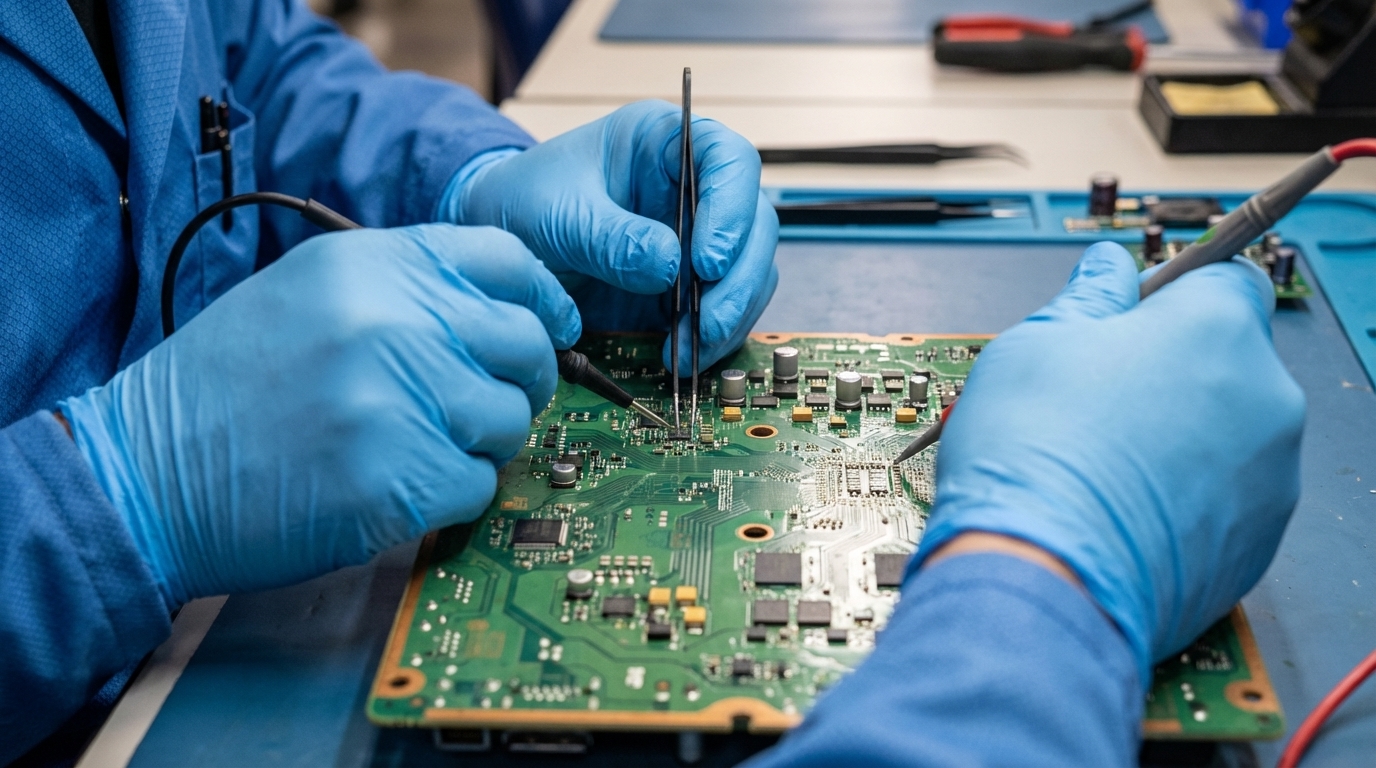
Dedicated returns processing areas keep reverse logistics from clogging forward fulfillment while giving electronics the specialized handling they need. These zones use mobile workstations, ESD-safe surfaces, and high-density storage built for returned tech products.
Zone design begins with segregated areas for different product categories so high-value items receive appropriate handling. Within these zones, secure storage protects devices awaiting data destruction, while climate-controlled environments prevent damage to sensitive electronics. Mobile workstations add flexibility by allowing staffing shifts during peak periods without sacrificing processing standards.
Premier Logitech operates dedicated returns facilities in the DFW logistics hub, along with nearshore operations in Mexico. This footprint provides capacity that scales with client volume while holding service levels and compliance steady.
3. Build Rapid Inspection and 4 Rs Classification
The 4 Rs framework (Rebox, Refurbish, Recycle, Return to Stock) gives teams a clear structure for classifying returned electronics. Trained technicians process each item rapidly using rules-based grading instead of ad hoc decisions.
Rapid inspection protocols start with a visual check for physical damage. Technicians then run functional tests using standardized procedures. Classification rules draw on cosmetic condition, functional status, warranty coverage, and current demand for refurbished units.
Disposition accuracy becomes a key KPI, with targets above 95% to ensure correct routing into the right recovery channel. High accuracy protects margin by avoiding unnecessary scrapping and by feeding refurbishment, recommerce, or return-to-stock paths with the right units.
4. Tighten Data Security and Compliance for Returns
Data-bearing devices need strict controls throughout the returns journey to protect personal information and meet regulatory requirements. ISO/IEC 27001 provides a framework for managing sensitive data through policies, procedures, and structured risk management.
Effective security protocols include immediate device isolation on receipt, certified data destruction that meets NIST guidelines, and chain-of-custody documentation for every handoff. CMMC requirements for government contracts add further controls such as personnel screening and restricted facility access.
Compliance programs often rely on ISO 9001 and 14001 quality frameworks, SOC 2 attestations, and Trade Agreements Act adherence for government customers. Premier Logitech maintains certifications including CAGE Code 4WAJ9 for federal partnerships, supporting secure handling of sensitive technology assets.
5. Apply AI to Sorting and Grading Decisions
AI-powered systems improve sorting accuracy and processing speed by automating decisions based on rules and machine learning models. These tools review visual characteristics, functional test results, and market data to support disposition choices that protect recovery value.
Implementation typically combines computer vision for cosmetic assessment, automated testing for functional checks, and predictive analytics for market demand forecasting. Rules-based engines keep grading consistent, while machine learning improves accuracy over time as the system learns from outcomes.
Grading speed and accuracy metrics show how well the system performs. Targets often include shorter processing time per unit and higher disposition accuracy. Premier Logitech uses AI-optimized workflows to raise throughput while still adapting to changing OEM requirements and market shifts.
6. Build Scalable Staffing Models for Peak Surges
Peak season returns create sharp volume swings, so returns operations need staffing models that protect service levels without inflating fixed labor costs. Start with cross-trained permanent staff who form a stable core and can move between roles as demand shifts.
Supplement this core team with output-based temporary agencies during surge periods so labor spend aligns with actual productivity. Support both groups with modular workstation designs that fit different team sizes without major facility changes.
Training programs keep quality consistent as headcount rises and falls. Standardized procedures, visual work instructions, and competency checks help new and temporary staff reach target performance quickly. Performance metrics for productivity, accuracy, and training effectiveness guide ongoing staffing decisions.
7. Use Returns Analytics to Prevent Future Returns
Analytics reveal patterns and root causes behind returns so teams can prevent repeat issues. AI-powered demand forecasting systems use machine learning and predictive analytics to process historical sales, seasonal trends, and market shifts for better planning.
Returns analytics draw on return reasons, defect patterns, customer feedback, and warranty claim data. Predictive models highlight products with high return risk so teams can act early with design changes, quality improvements, or clearer customer education.
Return reduction metrics then track the impact of these actions. Common targets include lower return rates by product family and higher customer satisfaction scores. Lifecycle analytics and reporting support continuous improvement and long-term planning.
8. Streamline Refurbishment and Value Recovery Channels
Efficient refurbishment programs increase asset recovery by restoring and reselling returned units through the right channels. B-grade returned items often achieve strong resale recovery through recommerce channels when processed and marketed correctly.
Refurbishment workflows typically include cosmetic repair, functional repair, software updates, and quality checks before resale. Rapid exchange programs ship replacements immediately while returned units move through refurbishment, which raises customer satisfaction and reduces safety stock needs.
Sustainability goals align closely with these efforts. Responsible recycling for end-of-life products, parts harvesting for repair, and e-waste reduction through longer product lifecycles all support environmental targets. Premier Logitech’s ASC authorizations for more than 20 OEM brands enable refurbishment that maintains warranty compliance and resale eligibility.
These eight practices work together as a practical framework for handling product returns in large tech warehouses. Ready to apply them in your operation? Talk to a lifecycle expert to develop a tailored implementation plan that fits your operational and compliance needs.
Frequently Asked Questions
How do you handle data security in tech warehouse returns?
Data security in tech warehouse returns relies on strict controls from receipt through final disposition. Operations teams isolate data-bearing devices on arrival, apply certified data destruction that meets NIST standards, and maintain detailed chain-of-custody records. Secure processing areas with restricted access, ESD-safe workstations, and trained technicians support correct handling. For government work, CMMC requirements add personnel screening and facility access controls, supported by SOC 2 and related security attestations.
What is the 4 Rs classification for electronics returns?
The 4 Rs framework organizes electronics returns into four clear paths. Rebox applies to items in sellable condition that need minimal work. Refurbish covers devices that require cosmetic or functional repair. Recycle applies to end-of-life products that need responsible disposal. Return to Stock fits items that can move directly back into inventory. Classification draws on cosmetic condition, function, warranty status, and demand so each unit follows the path that protects value and compliance.
How do you scale returns processing for peak surges?
Scaling returns processing for peak surges combines flexible staffing, modular workstations, and automation. Cross-trained permanent staff handle core volume, while output-based temporary labor adds capacity during spikes. Modular workstation layouts support different team sizes without major reconfiguration. WMS integration and automated tools reduce manual touches so teams can handle higher volumes. Dedicated returns zones with mobile workstations allow fast capacity expansion without slowing forward fulfillment.
What role does AI play in 2026 returns management?
AI supports returns management through automated sorting, grading, and forecasting. Computer vision tools deliver consistent cosmetic grading, while machine learning models refine decisions as they process more units. Predictive analytics highlight return trends and root causes so teams can prevent repeat issues. AI-driven demand forecasting also supports inventory and capacity planning for both forward and reverse flows.
What KPIs measure successful reverse logistics?
Key performance indicators for reverse logistics include cycle time from receipt to disposition, disposition accuracy above 95%, and value recovery rate as a share of original product value. Teams also track return-to-resale cycle time, cost per processed return, and customer satisfaction for exchange programs. Real-time analytics dashboards bring these metrics together so leaders can spot issues quickly and drive continuous improvement.
Conclusion: Turning Tech Returns into a Strategic Advantage
Applying these returns practices in large tech warehouses reduces processing costs, shortens turnaround times, improves value recovery, and strengthens data security compliance. The approach addresses the specific demands of electronics while scaling with volume swings and market changes.
Success depends on integrated technology, dedicated processing zones, strong security protocols, and experienced reverse logistics partners. Premier Logitech’s end-to-end capabilities, ASC authorizations, and scalable operations help shift returns management from a cost center to a reliable source of recovered value.
Talk to a lifecycle expert today to build a reverse logistics strategy that improves your returns performance while maintaining compliance and maximizing asset recovery.