
Last updated: April 21, 2026
Key Takeaways for High-Volume Tech Returns
-
Tech returns reached 12.2% of online orders in 2026, creating urgent demand for efficient reverse logistics that manage volume and protect margin.
-
AI-powered triage, RFID tracking, and rapid grading increase processing speed, cut errors, and provide real-time visibility across every returns stage.
-
Structured depot repair (L1-L4), secure data wipes, and compliance workflows align with NIST, CMMC, and e-waste rules while maximizing refurbishment value.
-
Rapid exchange programs, parts harvesting, and analytics-driven decisions turn returns into revenue opportunities and support continuous improvement.
-
Partner with Premier Logitech, the ASC-authorized expert, to streamline your high-volume tech returns with proven end-to-end solutions.
Who Should Use This Guide and Core Reverse Logistics Terms
This guide serves supply chain VPs, reverse logistics directors, and product lifecycle managers at technology OEMs, telecom providers, and consumer electronics brands handling 10,000 or more weekly returns. The strategies align with U.S. requirements such as NIST cybersecurity frameworks, CMMC rules for government contracts, and evolving e-waste regulations.
Several core terms appear throughout this guide. RMA (Return Merchandise Authorization) manages the initial return request and approval. Depot repair covers L1-L4 service levels, from basic diagnostics to component-level repair. Triage and grading determine the next step for each product. Refurbishment, ITAD (IT Asset Disposition), and ASC (Authorized Service Center) status support value recovery through certified, auditable processes.
7 Proven Reverse Logistics Strategies for High-Volume Tech Returns
Strategy 1: Centralize Intake and Use AI for Triage Decisions
Centralized intake concentrates return volume in one location for consistent, efficient processing, while AI-powered triage automates the first assessment. AI implementation improves processing efficiency and reduces fraud-related losses through automated triage and fraud detection. Set up a single intake facility with automated sorting that uses computer vision to read serial numbers, assess condition, and route items to the correct disposition path.
Key steps include deploying barcode scanners tied directly to your RMA system, training AI models on your product catalog, and defining disposition rules for each condition grade. This structure standardizes processing and reduces human error. The main hurdle involves upfront AI training effort and integration with existing systems.
Strategy 2: Use RFID and Automation for Real-Time Item Tracking
RFID and automation give you continuous visibility across the reverse logistics flow, from arrival to final outcome. RFID tags and GPS tracking with AI improve processing efficiency while lowering loss and tampering risk. Place RFID readers at intake, triage, repair, and disposition checkpoints to capture each movement.
Configure your warehouse management system so inventory status updates automatically as items move through each stage. This real-time view supports accurate customer updates and reduces the chance that units disappear in the process. The technology investment often pays off through lower labor costs, fewer write-offs, and higher customer satisfaction.
Strategy 3: Build Fast, Consistent Triage, Sorting, and Grading
Fast, accurate triage prevents bottlenecks and sends each product to the path that delivers the most value. Computer vision systems improve processing speed while supporting consistent grading standards. Define clear criteria for each grade, from A-grade (like-new) to D-grade (parts only).
Train staff on standardized inspection steps and add quality control checkpoints to protect grading accuracy. For high-volume categories such as smartphones and tablets, automated inspection stations can handle throughput while applying the same standards. This consistency in grading directly shapes downstream value recovery and the customer experience when refurbished units re-enter the market.
Strategy 4: Structure Depot Repair and Refurbishment (L1-L4)
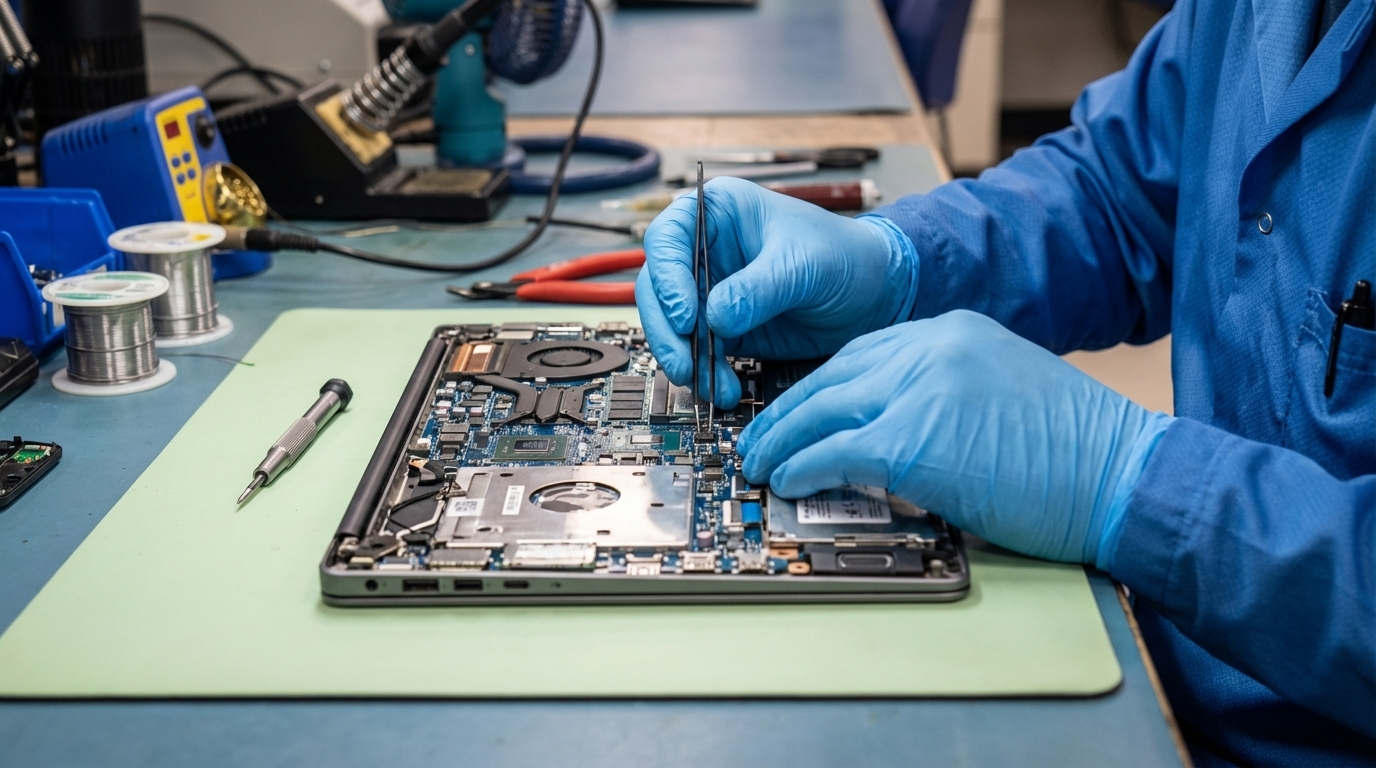
Structured depot repair recovers maximum value by matching effort to product complexity and worth. L1 repair covers basic diagnostics and software fixes. L2 focuses on component swaps. L3 handles board-level work, and L4 supports complex reconstruction. Optimized refurbishment processes improve recovery rates.
Design repair workflows around product value thresholds and technical difficulty. High-value devices can justify L3 or L4 work, while commodity items may only receive L1 or L2 attention. Work with ASC-authorized facilities to preserve warranty coverage and maintain OEM compliance across the refurbishment process.
Strategy 5: Protect Data and Meet E-Waste Compliance Standards
Data security and e-waste compliance sit at the center of responsible tech returns. The EU’s Digital Waste Shipment System (DIWASS) mandates exclusively digital systems for documentation of waste shipments between Member States, and 2026 regulations hold enterprises responsible for their entire downstream ITAD chains.
Use NIST-compliant data wiping with cryptographic verification and keep detailed chain-of-custody records for every device. Build relationships with certified recyclers and align your processes with ISO 14001 environmental standards. Regular internal and third-party audits help avoid violations and protect your brand.
Strategy 6: Run Rapid Exchange and Structured Parts Harvesting
Rapid exchange programs reduce customer downtime, while parts harvesting recovers value from units that cannot be repaired. Maintain advance replacement inventory for critical SKUs and set up expedited shipping with reliable carriers. Robotic sortation systems improve processing throughput by moving products quickly between stages.
Create clear parts harvesting rules that flag high-value components such as processors, memory, and specialized sensors. Use inventory systems that track harvested parts and feed them into your spare parts supply chain. This approach extends product lifecycles and lowers spend on new components.
Strategy 7: Apply Analytics for Continuous, Closed-Loop Improvement
Data analytics support ongoing improvement by turning every return into a feedback signal. Companies using predictive analytics experience improvements in return rates and forecasting accuracy. Implement transportation management systems (TMS) and related tools that capture performance data at each reverse logistics touchpoint.
Track KPIs such as turnaround time, recovery rate, cost per return, and customer satisfaction. Use these metrics to spot bottlenecks, refine routing choices, and forecast return volumes more accurately. Schedule regular review sessions with operations, finance, and customer teams so insights translate into process changes.
Implementation Framework and Core Success Metrics
Structured governance and clear ownership keep reverse logistics programs on track. Build RACI (Responsible, Accountable, Consulted, Informed) matrices for each process step and create disposition decision trees that guide staff through complex scenarios. Understanding industry benchmarks helps you set realistic targets for your implementation. Ecommerce return rates by category range from 4-5% for beauty to 25-40% for apparel, while AI-optimized operations achieve significant recovery improvements.
Focus on benchmarks such as processing turnaround time, value recovery rate, and compliance audit scores. Review performance regularly to confirm you meet targets and to identify where new tools, training, or partners can close gaps.
Overcoming Common Challenges in High-Volume Tech Returns
High-volume tech returns create operational strain that requires deliberate planning. Data inconsistencies across systems cause visibility gaps that slow processing and frustrate customers. SLA misses often occur when peak return volumes exceed available capacity. Vendor fragmentation adds complexity when different partners manage intake, repair, and recycling.
Address these issues through vendor consolidation, standardized data formats, and scalable processing capacity. Retail returns continue to rise year over year, which increases pressure on reverse logistics networks. Add automated escalation paths for high-priority returns and maintain buffer capacity for seasonal spikes.
Need help overcoming these challenges? Discuss your specific challenges with our team to explore Premier Logitech’s proven solutions for high-volume tech returns.
Key 2026 Trends and How to Measure Results
AI, blockchain, and IoT integration is transforming reverse logistics with predictive analytics, secure transactions, and real-time monitoring. The EU’s Digital Product Passport (DPP) gives stakeholders access to product lifecycle data, and blockchain frameworks enable immutable product history tracking.
Measure results with a balanced KPI set that covers turnaround time reductions, value recovery improvements, and compliance audit outcomes. The global reverse logistics market is projected to reach $1.75 trillion by 2035, which underscores the strategic value of a well-run returns operation.
Why Enterprises Choose Premier Logitech for Tech Returns
Premier Logitech delivers comprehensive reverse logistics services with ASC authorization for more than 20 OEM brands and significant processing capacity. Our end-to-end support spans RMA management, depot repair, refurbishment, ITAD, and responsible recycling, with compliance that includes NIST, CMMC, and SOC 2 certifications.
Our approach turns returns into value through rapid exchange programs, certified refurbishment, and secure data destruction. With nationwide logistics coverage and nearshore operations, we provide the scale and expertise required for complex, high-volume tech returns.
Ready to improve your reverse logistics operation? Schedule a consultation to discover how Premier Logitech can transform your returns process.
Frequently Asked Questions
What are the top reverse logistics strategies for electronics?
The most effective strategies include centralized AI-powered triage, RFID tracking for real-time visibility, rapid grading and sorting, structured depot repair, secure data wiping workflows, rapid exchange programs, and analytics-driven optimization. Together, these approaches shorten processing time, increase value recovery, and support compliance with data security and environmental regulations.
How does AI improve high-volume tech returns processing?
AI improves reverse logistics through automated triage, computer vision inspection, predictive analytics, and fraud detection. These capabilities increase processing speed compared to manual methods, reduce operating costs, and raise recovery rates. Machine learning models also refine disposition decisions over time using historical data and current market conditions.
What are the main challenges of RMA management for tech products?
Major challenges include handling peak return volumes, protecting data throughout processing, keeping pace with changing e-waste regulations, coordinating multiple vendors, tracking items across complex workflows, and balancing speed with grading and repair quality. Effective RMA management depends on integrated systems, clear policies, and standardized procedures.
How do e-waste compliance requirements affect tech returns processing?
E-waste regulations require detailed tracking, certified recycling, and accurate documentation for cross-border shipments. As mentioned in the compliance workflows section, DIWASS requires digital documentation, while battery regulations add requirements for component labeling and carbon footprint verification. Meeting these rules demands secure chain-of-custody processes and partnerships with certified recyclers.
What types of reverse logistics models work best for high-volume tech returns?
Centralized models deliver cost efficiency and consistent processing but can increase transit time. Decentralized networks provide faster regional response while adding operational complexity. Hybrid models combine centralized expertise with regional processing hubs to balance cost and speed. The right model depends on product mix, geography, and service level commitments.
What are the key benefits of optimized reverse logistics for tech returns?
Well-run reverse logistics programs reduce processing costs, shorten turnaround times, and increase value recovery through refurbishment and resale. They also support regulatory compliance, improve customer satisfaction, and advance sustainability goals. Companies often see measurable gains in efficiency and recovered value when they apply a comprehensive optimization strategy.